History of Electroculture & Magnetoculture

First, there is a large body of research in the area known as "electroculture". Magnetoculture is a new development based on a large part of electroculture techniques and discoveries.
Who discovered electroculture?
There are some facts that proofs that it was already known by the egyptians, maybe it was already used in Babylon.
I can name some of the known past researchers, but it is quite impossible to name them all, also to include all their friends and secret collegue researchers we would never know about.
The biggest contributors of know how to the field of electroculture and magnetoculture, with their direct and indirect research, that we know about are :
Karl Lemström, Vernon Blackman, Georges Lakhovsky, Marcel Violet, Nikola Tesla, Arsène Arsonval, Roland Welhren, Bob Beck, Hulda Clark, Goldsworthy, Justin Christofleau, Couillaud, Philip Forrer, Oswald Boudie, Duchatel, Hangarter, ...
Where did appear the term "Magnetoculture", Electroculture, Magneto agriculture?
The US patent office has a subclass 1.3 of patents named by "electroculture, magnetoculture" that is found in the class 47 "plant husbandry". We don't know at which date they decided to use the term magnetoculture with electroculture.
We don't know exactly when this term appeared for the first time. We use this term because it is the most appropriate to the field of what the beewax magnetic capacitors do by using magnetic forces to increase plant growth and development.
Karl Selim Lemström
One of the pioneers, Karl Selim Lemström, a physicist from the University of Helsinki, published an English translation of his results as long ago as 1904. Lemström carried out several field experiments in which he exposed growing plants to electric fields from overhead wires, creating a voltage gradient of about 10 kilovolts per metre. The wires weren't directly connected to the plants, but small currents could reach the plants via ions in the air. The plants flourished under these conditions, producing a harvest almost one-and-a-half times that expected.
Vernon Blackman
In Britain, Vernon Blackman—a plant physiologist based, like Goldsworthy, at Imperial College—set about staging similar experiments. Between 1915 and 1920, he ran field trials on oats, barley, winter-sown wheat and clover-hay mixtures in three different areas of the country. He charged wires above his test plots to between 40 and 80 kilovolts for six hours each day.
Blackman was convinced that the electricity was having an effect. Of his 18 field trials, 14 showed increased yield. Nine had yields over 30 per cent higher than expected. Oats and barley were up 22 per cent compared with the control plots. Tests on plants in pots seemed to confirm this, with maize and barley plants flourishing under the wires. When Blackman made the wires negative instead of positive, the effect persisted, just as it did when he substituted alternating currents for direct currents. He recorded successes with currents as low as 10 picoamps (10 x 10-12 amps) flowing through the plants, but currents above 10 nanoamps (10 x 10-9 amps) reduced growth.
Although the tests now sound rather eccentric, they were taken seriously at the time. Blackman was a distinguished professor and a Fellow of the Royal Society, who was known for his meticulous eye for detail. His work also had official approval and interest from the electroculture committee of the Ministry of Agriculture and Fisheries.
Goldsworthy
So why aren't we eating electrified crops today? The trouble with electroculture was that it didn't always work. When botanists in the US tried similar tests they drew a blank. "There was a huge controversy about this and people were at one another's throats virtually," says Goldsworthy. "The subject died a natural death just before the war."
And here the matter rests. On the one hand, the positive results could have been caused by something other than electricity. Equally, the failures don't necessarily mean that electricity has no effect. In fact, if Goldsworthy is right then mixed results are predictable. Electrified plants that have geared themselves up for a soaking might well respond poorly if that soaking doesn't come, as must often have happened in the field trials with artificial currents. The failure of the American experiments may also have been due to high background voltage gradients from sandstorms, says Goldsworthy. These could have stimulated the control plots and obscured any effect of the treatment.
If the effect was real, I ask, then surely we'd expect to find plants growing particularly well near power lines. "People have occasionally reported greener areas under power lines," says Goldsworthy, with a mischievous grin, "but you can't be certain that it's an effect of the electricity, because birds sit on power lines and what do birds do when they're sitting around?"
There is no doubt that plants respond to fertilisation by bird droppings, but can they detect and respond to environmental electricity? There is evidence that they can, says Goldsworthy, and this further supports his idea. For a start, small electrical currents—carried by ions such as hydrogen, calcium and potassium—flow through certain plant cells. These currents, which measure around 0.1 microamps per square centimetre, appear to play a key role in plant development.
In developing seaweed eggs of the genus Fucus, for instance, an electrical current defines the eventual axis of the growing plant. Calcium ions flood into the cell at one particular site—and this region eventually becomes an anchoring structure, called the rhizoid. In other plants, too, including oat seedlings, cell currents seem to define the direction in which growth occurs, with growth taking place parallel to the current.
"Electricity was first harnessed in evolution as a means of controlling growth," says Goldsworthy. "It's more fundamental than the use of electricity by animals in nerve impulses." Electricity is important for cell growth in both plants and animals and, in an intriguing series of experiments, Goldsworthy and his colleague Minas Mina believe they have discovered how it might work.
They studied the currents flowing into and out of tobacco cells growing in tissue culture using a device called a vibrating probe. This has a vibrating head which picks up tiny voltage differences between two points in space. With enormous ingenuity, the researchers modified an existing apparatus, using a loudspeaker to produce the vibrations and a wooden kebab skewer to carry those vibrations to the voltage sensor.
Vital ingredient
In this way they could make long-term measurements around individual cells, monitoring currents of around 0.1 microamps per square centimetre. They then exposed individual cells for a few hours to "artificial" currents an order of magnitude bigger than the natural currents. After switching off the artificial current, they tested the cell again. The current pattern had changed, with the cell tending to become repolarised in line with the applied current. This could explain the observation that plant cells apparently alter their own currents and bring them into line with those of nearby cells, says Goldsworthy.
Further tests showed that cells only respond to an artificial current if their environment contains calcium ions. One interpretation is that the response is the work of voltage-gated calcium channels—special proteins that sit in cell membranes and act as doorways for calcium. When they sense a change in voltage across the membrane, they flip open and let calcium ions stream into cells.
Goldsworthy's point is that this mechanism could also be used to sense atmospheric electricity, provided the currents induced by a thunderstorm were similar in magnitude to those that cells can detect. "Having got an electrosensing mechanism in the plant, it would be very surprising if evolution hadn't made use of it for other purposes," says Goldsworthy. "It's done it in animals—you get all sorts of electroreceptors in fish—so why not in plants?"
The fact that the mechanism depends on calcium could be highly significant. Calcium is a ubiquitous cellular messenger that switches on enzymes within cells, an effect that could underpin the increased growth that sometimes seems to follow electrical stimulation. And the calcium connection may also explain why electroculture experiments aren't always successful. "Calcium stimulates the cell to do whatever it's programmed to do," explains Goldsworthy. "I like to think of it as being the `accelerator' of the cell. And the response you get will depend on what gear it's in—forward or reverse."
Goldsworthy has also tested the powers of electrical stimulation in his lab by applying a current directly to cultured plant tissues. His aim was to induce polarisation in groups of cells to increase the level of collaboration in building structures such as shoots. Working with his colleague Keerti Singh Rathore, he used tiny electrodes to deliver between 1 and 2 microamps, for long periods, to collections of undifferentiated cells from tobacco plants. The effect was extraordinary. Growth rates increased by around 70 per cent and the cultures developed up to five times as many shoots.
The method was patented, but it hasn't made Goldsworthy a rich man. Applying the current directly using electrodes made the technique labour-intensive. And when the researchers tried to achieve the same result using alternating currents in metal grids above and below the cultures, the only result was a greening of tissue.
What about other practical applications? If there were a revival of interest in crop electroculture, for instance, might we end up sitting down to a meal of supercharged salads and galvanised courgettes? Goldsworthy says it might be possible, but could well be uneconomic because of the large capital investment involved. And it might not always work.
"Where I think it might work," he says tentatively, "is in seed treatment." Tests carried out in Russia, he explains, have shown that electric currents may trigger germination of seeds such as cherry and barley. This could reflect a natural mechanism by which seeds germinate after thunderstorms, when conditions are right for growth. If seeds could be persuaded to germinate more uniformly by treating them with electricity, there would be benefits for growers.
After our interview, I talked to half-a-dozen plant scientists about Goldsworthy's hypothesis. Some think it's a neat idea, but—as you would expect with any speculative notion—the general feeling is that more evidence would be welcome. "There is something there," says Paul Lynch of the University of Derby, "we're constantly surprised by what plants can do."
Another reaction comes from Mark Tester of Cambridge University: "Plant growth certainly appears to be affected by experimentally applied currents passing through their tissues, and these currents may well be similar in magnitude to those beneath thunderclouds. But this would be a highly sophisticated response to what would be a very rare event for many
Sources : Internet articles and books
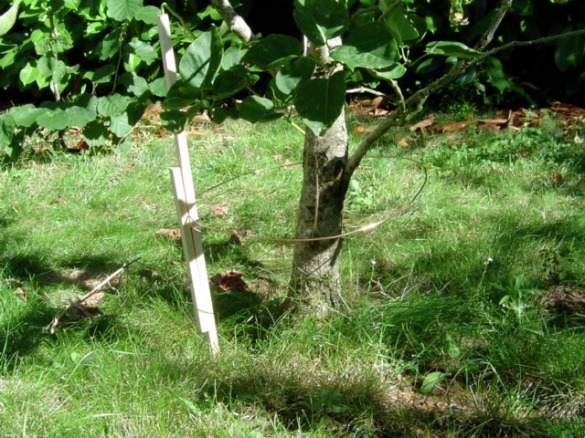
Photo below : Lakhovsky coil put on a little tree. Experiment in 2005 by Yannick VD in France.
Who discovered electroculture?
There are some facts that proofs that it was already known by the egyptians, maybe it was already used in Babylon.
I can name some of the known past researchers, but it is quite impossible to name them all, also to include all their friends and secret collegue researchers we would never know about.
The biggest contributors of know how to the field of electroculture and magnetoculture, with their direct and indirect research, that we know about are :
Karl Lemström, Vernon Blackman, Georges Lakhovsky, Marcel Violet, Nikola Tesla, Arsène Arsonval, Roland Welhren, Bob Beck, Hulda Clark, Goldsworthy, Justin Christofleau, Couillaud, Philip Forrer, Oswald Boudie, Duchatel, Hangarter, ...
Where did appear the term "Magnetoculture", Electroculture, Magneto agriculture?
The US patent office has a subclass 1.3 of patents named by "electroculture, magnetoculture" that is found in the class 47 "plant husbandry". We don't know at which date they decided to use the term magnetoculture with electroculture.
We don't know exactly when this term appeared for the first time. We use this term because it is the most appropriate to the field of what the beewax magnetic capacitors do by using magnetic forces to increase plant growth and development.
Karl Selim Lemström
One of the pioneers, Karl Selim Lemström, a physicist from the University of Helsinki, published an English translation of his results as long ago as 1904. Lemström carried out several field experiments in which he exposed growing plants to electric fields from overhead wires, creating a voltage gradient of about 10 kilovolts per metre. The wires weren't directly connected to the plants, but small currents could reach the plants via ions in the air. The plants flourished under these conditions, producing a harvest almost one-and-a-half times that expected.
Vernon Blackman
In Britain, Vernon Blackman—a plant physiologist based, like Goldsworthy, at Imperial College—set about staging similar experiments. Between 1915 and 1920, he ran field trials on oats, barley, winter-sown wheat and clover-hay mixtures in three different areas of the country. He charged wires above his test plots to between 40 and 80 kilovolts for six hours each day.
Blackman was convinced that the electricity was having an effect. Of his 18 field trials, 14 showed increased yield. Nine had yields over 30 per cent higher than expected. Oats and barley were up 22 per cent compared with the control plots. Tests on plants in pots seemed to confirm this, with maize and barley plants flourishing under the wires. When Blackman made the wires negative instead of positive, the effect persisted, just as it did when he substituted alternating currents for direct currents. He recorded successes with currents as low as 10 picoamps (10 x 10-12 amps) flowing through the plants, but currents above 10 nanoamps (10 x 10-9 amps) reduced growth.
Although the tests now sound rather eccentric, they were taken seriously at the time. Blackman was a distinguished professor and a Fellow of the Royal Society, who was known for his meticulous eye for detail. His work also had official approval and interest from the electroculture committee of the Ministry of Agriculture and Fisheries.
Goldsworthy
So why aren't we eating electrified crops today? The trouble with electroculture was that it didn't always work. When botanists in the US tried similar tests they drew a blank. "There was a huge controversy about this and people were at one another's throats virtually," says Goldsworthy. "The subject died a natural death just before the war."
And here the matter rests. On the one hand, the positive results could have been caused by something other than electricity. Equally, the failures don't necessarily mean that electricity has no effect. In fact, if Goldsworthy is right then mixed results are predictable. Electrified plants that have geared themselves up for a soaking might well respond poorly if that soaking doesn't come, as must often have happened in the field trials with artificial currents. The failure of the American experiments may also have been due to high background voltage gradients from sandstorms, says Goldsworthy. These could have stimulated the control plots and obscured any effect of the treatment.
If the effect was real, I ask, then surely we'd expect to find plants growing particularly well near power lines. "People have occasionally reported greener areas under power lines," says Goldsworthy, with a mischievous grin, "but you can't be certain that it's an effect of the electricity, because birds sit on power lines and what do birds do when they're sitting around?"
There is no doubt that plants respond to fertilisation by bird droppings, but can they detect and respond to environmental electricity? There is evidence that they can, says Goldsworthy, and this further supports his idea. For a start, small electrical currents—carried by ions such as hydrogen, calcium and potassium—flow through certain plant cells. These currents, which measure around 0.1 microamps per square centimetre, appear to play a key role in plant development.
In developing seaweed eggs of the genus Fucus, for instance, an electrical current defines the eventual axis of the growing plant. Calcium ions flood into the cell at one particular site—and this region eventually becomes an anchoring structure, called the rhizoid. In other plants, too, including oat seedlings, cell currents seem to define the direction in which growth occurs, with growth taking place parallel to the current.
"Electricity was first harnessed in evolution as a means of controlling growth," says Goldsworthy. "It's more fundamental than the use of electricity by animals in nerve impulses." Electricity is important for cell growth in both plants and animals and, in an intriguing series of experiments, Goldsworthy and his colleague Minas Mina believe they have discovered how it might work.
They studied the currents flowing into and out of tobacco cells growing in tissue culture using a device called a vibrating probe. This has a vibrating head which picks up tiny voltage differences between two points in space. With enormous ingenuity, the researchers modified an existing apparatus, using a loudspeaker to produce the vibrations and a wooden kebab skewer to carry those vibrations to the voltage sensor.
Vital ingredient
In this way they could make long-term measurements around individual cells, monitoring currents of around 0.1 microamps per square centimetre. They then exposed individual cells for a few hours to "artificial" currents an order of magnitude bigger than the natural currents. After switching off the artificial current, they tested the cell again. The current pattern had changed, with the cell tending to become repolarised in line with the applied current. This could explain the observation that plant cells apparently alter their own currents and bring them into line with those of nearby cells, says Goldsworthy.
Further tests showed that cells only respond to an artificial current if their environment contains calcium ions. One interpretation is that the response is the work of voltage-gated calcium channels—special proteins that sit in cell membranes and act as doorways for calcium. When they sense a change in voltage across the membrane, they flip open and let calcium ions stream into cells.
Goldsworthy's point is that this mechanism could also be used to sense atmospheric electricity, provided the currents induced by a thunderstorm were similar in magnitude to those that cells can detect. "Having got an electrosensing mechanism in the plant, it would be very surprising if evolution hadn't made use of it for other purposes," says Goldsworthy. "It's done it in animals—you get all sorts of electroreceptors in fish—so why not in plants?"
The fact that the mechanism depends on calcium could be highly significant. Calcium is a ubiquitous cellular messenger that switches on enzymes within cells, an effect that could underpin the increased growth that sometimes seems to follow electrical stimulation. And the calcium connection may also explain why electroculture experiments aren't always successful. "Calcium stimulates the cell to do whatever it's programmed to do," explains Goldsworthy. "I like to think of it as being the `accelerator' of the cell. And the response you get will depend on what gear it's in—forward or reverse."
Goldsworthy has also tested the powers of electrical stimulation in his lab by applying a current directly to cultured plant tissues. His aim was to induce polarisation in groups of cells to increase the level of collaboration in building structures such as shoots. Working with his colleague Keerti Singh Rathore, he used tiny electrodes to deliver between 1 and 2 microamps, for long periods, to collections of undifferentiated cells from tobacco plants. The effect was extraordinary. Growth rates increased by around 70 per cent and the cultures developed up to five times as many shoots.
The method was patented, but it hasn't made Goldsworthy a rich man. Applying the current directly using electrodes made the technique labour-intensive. And when the researchers tried to achieve the same result using alternating currents in metal grids above and below the cultures, the only result was a greening of tissue.
What about other practical applications? If there were a revival of interest in crop electroculture, for instance, might we end up sitting down to a meal of supercharged salads and galvanised courgettes? Goldsworthy says it might be possible, but could well be uneconomic because of the large capital investment involved. And it might not always work.
"Where I think it might work," he says tentatively, "is in seed treatment." Tests carried out in Russia, he explains, have shown that electric currents may trigger germination of seeds such as cherry and barley. This could reflect a natural mechanism by which seeds germinate after thunderstorms, when conditions are right for growth. If seeds could be persuaded to germinate more uniformly by treating them with electricity, there would be benefits for growers.
After our interview, I talked to half-a-dozen plant scientists about Goldsworthy's hypothesis. Some think it's a neat idea, but—as you would expect with any speculative notion—the general feeling is that more evidence would be welcome. "There is something there," says Paul Lynch of the University of Derby, "we're constantly surprised by what plants can do."
Another reaction comes from Mark Tester of Cambridge University: "Plant growth certainly appears to be affected by experimentally applied currents passing through their tissues, and these currents may well be similar in magnitude to those beneath thunderclouds. But this would be a highly sophisticated response to what would be a very rare event for many
Sources : Internet articles and books
Photo below : Lakhovsky coil put on a little tree. Experiment in 2005 by Yannick VD in France.
Georges Lakhovsky
Georges Lakhovsky, Bioelectric Pioneer (1869-1942)
Photo above : You see a Lakhovsky antenna placed round this plant. This plant was sick and became again healthy by the use of this antenna. Experiment done by Yannick Van Doorne, 2003. In the page links you can download a document how to make your own Lakhovsky coil to use in your experiments.
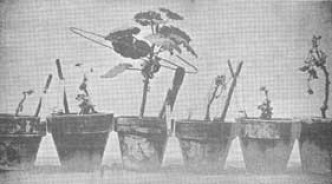
Photo : One of the first experiments of Lakhovsky with his antenna coils. Germanium plants with one plant treated with a Lakhovsky antenna coil. All the plants were inoculated with cancer and only the one with the coil healed and survived.
Exerpts taken from article by Ken Adachi, http://educate-yourself.org/be/lakhovskyindex.shtml
Georges Lakhovsky, a Russian engineer who had emigrated to France before World War I. In 1929, Lakhovsky published a book in French called The Secret of Life. A few years later it was translated into Spanish, German, and Italian, but it was not until September, 1939 that it was finally published in London in English; precisely the month when Hitler attacked Poland and kicked off World War II. The book received almost no attention in the English press or from the North American medical establishment.
What Lakhovsky discovered was simply mind boggling: He postulated that all living cells (plants, people, bacteria, parasites, etc.) possess attributes which normally are associated with electronic circuits.
Lakhovsky compared a living cell with and electronic circuit that can receive and emit electromagnetic waves or energy.
These cellular attributes include resistance, capacitance, and inductance. These 3 electrical properties, when properly configured, will cause the recurrent generation or oscillation of high frequency sine waves when sustained by a small, steady supply of outside energy of the right frequency. This effect is known as resonance. It's easiest to compare it with a child swinging on a playground swing. As long as the parent pushes the swing a little at the right moment (the correct 'frequency'), the child will continue to swing high and continuously. In electronics, circuits which generate these recurrent sine waves can be called electromagnetic resonators, but more commonly they are referred to as oscillators. Lakhovsky tells us that not only do all living cells produce and radiate oscillations of very high frequencies, but they also receive and respond to oscillations imposed upon them from outside sources. This outside source of radiation or oscillations are due to cosmic rays which bombard the earth continuously. This stupendous realization, achieved during the golden years of radio, not only led to a new method of healing by the application of high frequency waves, but broadened appreciation for the newly emerging field of hidden science known as Radionics or Radiathesia.
When these outside sources of oscillations are in sympathy, that is they are exactly the same frequency as that produced by the cell, the strength and vigor of that cell will be reinforced and become stronger. If, on the other hand, these outside frequencies are of a slightly different frequency, rather than reinforce the cell's native oscillations, they might dampen or weaken them, resulting in a loss of vigor and vitality for that cell. The cells of disease causing organisms within an infected person, produce different frequencies than that of normal, healthy cells. For people or plants suffering from disease conditions, Lakhovsky found that if he could increase the amplitude (but not the frequency) of the oscillations of healthy cells, this increase would overwhelm and dampen the oscillations produced by the disease causing cells, thus bringing about the demise of the disease causing cells trying to set up shop in the body. If he pumped up the amplitude of the disease causing cells, their oscillations would gain the upper hand and cause the person or plant to become weaker and more ill. Lakhovsky viewed the progression of disease as essentially a battle between the resonant oscillations of host cells versus the oscillations emanating from pathogenic organisms.
He initially proved his theory using plants.
In December, 1924, he inoculated 10 germanium plants with a plant cancer that produced tumors. After 30 days, tumors had developed in all of the plants. He took one of the 10 infected plants and simply fashioned a heavy copper wire in a one loop, open-ended coil about 30 cm (12") in diameter around the center of the plant. and held it in place with an ebonite stake . The copper coil acted as an antennae or a tuning coil, collecting and concentrating oscillation energy from extremely high frequency cosmic rays. The diameter of the cooper loop determined which range of frequencies would be captured. He found that the 30 cm loop captured frequencies that fell within the resonant frequency range of the plant's cells. This captured energy reinforced the resonant oscillations naturally produced by the nucleus of the germanium's cells. This allowed the plant to overwhelm the oscillations of the cancer cells and destroy the cancer. The tumors fell off in less than 3 weeks and by 2 months, the plant was thriving. All of the other cancer-inoculated plants-without the antennae coil- died within 30 days. In his book, Lakhovsky shows pictures of the recovered plant after 2 months, 6 months, and 1 year. Three years later, with the original coil left in place, the plant grew into a very robust specimen.
Taking his cue from the germanium experiments, Lakhovsky then fashioned loops of copper wire that could be worn around the waist, neck, elbows, wrists, knees, or ankles of people (or animals) and found that (given enough time) much relief of painful symptoms were obtained. These simple coils, worn continuously around certain parts of the body, would invigorate the the strength of the human cells and increased the immune response which in turn took care of the offending pathogens. At the time, when news spread of the success achieved with these "Lakhovsky Coils", many Europeans were clamoring to get their own and often had to wait for months due to the backlog. One of the main reasons why so many people find copper wrist bracelets effective and beneficial is because the bracelet is functioning as a Lakhovsky Coil (it's also providing minute trace amounts of copper to the body, which helps too). To achieve the Lakhovsky effect, it's important that the coil (or bracelet) is "open" and made of copper. Closed rings simply don't work.
.
Lakhovsky's Multi-Wave Oscillator (MWO)
Geroges Lakhovsky publication of the English version of The Secret of Life at the very outbreak of World War II went unnoticed and little reviewed, but Lakhovsky's reputation for obtaining dramatic results with his amazing Multi-Wave Oscillator gained world wide attention nevertheless. By 1941, he had made his way to New York, escaping the Nazi occupation of France. Mark Clement, in The Waves that Heal, describes how Lakhovsky was approached by many people and organizations hoping to capitalize on his MWO therapy. A film was made by an " enterprising beautician" which featured several cases following treatment with the MWO that "proved to be both interesting and convincing" . Lakhovsky was also approached by several hospitals in New York hoping to test his apparatus experimentally. Remarkable results were obtained from a seven week clinical trial performed at a major New York City hospital and that of a prominent Brooklyn urologist in the summer of 1941. Later editions of The Secret of Life detailed many of these cases. What seemed like a promising development in the use of the MWO in America quickly faded after Lakhovsky unexpectedly died in New York in 1942 at the age of 73. His equipment was removed from the hospital and patients were told that the therapy was no longer available. Except for this brief trial in New York, Lakhovsky's work remained completely unknown to the American public. Even the spectacular success of the New York cases were quickly forgotten; an unlikely lapse of memory in the natural scheme of things. It seems that hidden hands were at work when it came to obliterating the memory of Lakhovsky's Multi-Wave Oscillator in America.
Bob Beck
The Bob Beck Rescue
Lakhovsky's name and achievements probably would have continued to remain unknown in America had it not been for the efforts of Dr. Bob Beck, D. Sc.. In1963, Bob found an original Lakhovsky MWO stored in the basement of a well known hospital in southern California. He managed to gain access to the machine and opened it up to see what was inside. He undoubtedly examined Lakhovsky's US patent of the Multi-Wave Oscillator as well (US patent # 1,962,565). He then wrote a series of articles which were published in the Borderlands Journal that explained how the MWO worked. A number of people began building their own MWO's based on Beck's articles in Borderlands. Later, in 1986, Borderlands put together a big manual called The Lakhovsky Multiple Wave Oscillator Handbook which was updated and revised again in 1988, '92, and '94. The Handbook includes a compilation of informative articles by many authoritative researchers on the MWO, including translated articles by Lakhovsky himself.
MWO in Operation
The MWO works by producing a broad range of high frequency pulsed signals that radiate energy into the patient via two round resonators: one resonator acting as a transmitter and the other as a receiver. The resonator is constructed from a series of open ended circular copper tubes terminated with ball shaped knobs. The copper tube rings nest one inside the other, but none touch each other. The ring assembly is held in place with silk thread in Lakhovsky's original design. Each ring has its open ended termination placed 180 degrees opposite from its adjacent ring. The machine generates a very wide spectrum of high frequencies coupled with static high voltage charges applied to the resonators using spark gaps.. These high voltages cause a corona discharge around the perimeter of the outside resonator ring that Nikola Tesla referred to as an "electric brush", but Lakhovsky used the French word, "effluvia" or "effluve". The patient sat on a wooden stool in between the two resonators and was exposed to these energies for about 15 minutes. These amplified, artificially produced multiple frequency waves sped up the recovery process by stimulating the resonance of healthy cells in the patient and in doing so, increased the immune response to the disease organisms. Lakhovsky early experiments with radio frequency generators used a device he called the Radio Cellular Oscillator, but later switched to an older 19th century design static generator called a Rhumkorff Coil which was able to sufficiently excite the resonator coils while avoiding the potential for thermal damage to the patient, which greatly concerned Lakhovsky. The MWO produced fundamental waves from 750,000 cycles per second up to 3 billion cycles per second with the harmonics of these fundamental frequencies extending the covered range much higher yet.
The circuit design and materials used by Dr. Beck are not exactly the same that Lakhovsky used, but Beck's design reportedly achieved good results. The design of Beck's resonators vary in a number of ways from Lakhovsky's. Bob mounted his nesting rings as flat copper foils on a PC laminate board, rather then using open suspended copper tube rings as Lakhovsky did. Bob was looking for a strong enough discharge energy to cause corona flashing between each of the copper foil rings while Lakhovsky's corona was only seen on the outer ring of the assembly. Lakhovsky's tubing coils hung suspended in space by the silk thread, allowing them to physically and electrically vibrate at their natural resonant frequency, a significant point of design.
Philip S. Callahan
He made known the importance of paramagnetism for the health of the soils and developed specially for this a measurement device useful for farmers and agriculture researchers.
Definition of paramagnetism: The atoms or molecules of a paramagnetic substance have a net magnetic spin such that the spins are capable of being temporarily aligned in the direction of an applied electromagnetic field when they are placed in that field. This produces an internal magnetic field (magnetic moment). They differ from magnetic substances (such as iron, nickel, & cobalt) where such spins remain aligned even when they are out of the applied field, e.g. are permanent. Magnetic susceptibility is measured, according to the physics handbook, in millionths of a CGS unit (Centimeters Grams Second), 1 × 10⁻⁶ CGS, or µCGS.
What does this mean for agriculture? All volcanic soil & rock is paramagnetic, (from 200 to 2,000 µCGS). According to Dr. Callahan’s research, a soil magnetic susceptibility reading of 0 - 100 µCGS would be poor; 100 - 300 µCGS good; 300 - 800 µCGS very good; & 800 -1200 µCGS above excellent. This force can be added to soil, where it has eroded away, by spreading ground-up paramagnetic rock (basalt, granite, etc.) into the soil.
Dr. Callahan estimates that 60 to 70% of this volcanic paramagnetic force has been eroded away worldwide. Soil should be "alive" with living organisms e.g. bacteria and earth worms, plant material (compost) & the rich soil paramagnetic force. Mineralization of the soil by adding separate minerals does not necessarily mean that the paramagnetic force has been added. For more information about paramagnetism, we recommend Dr. Callahan’s book, ”Paramagnetism - Rediscovering Nature’s Secret Force of Growth”
Philip S. Callahan and his discoveries
Philip S. Callahan, Ph. D., schooled as an entomologist, was stationed in Ireland as a radio technician during World War II. He has written two books dealing specifically with his discoveries there of the seemingly magical properties of the ancient Irish round towers and of certain rocks and rock powders.
Titled Natures Silent Music and Paramagnetism, these books are available from his
publisher, Acres U.S.A. (P. O. Box 91299, Austin, TX, 78709, telephone 800-355-5313, website
www.acresusa.com).
In an epilogue, Dr. Callahan says (page 194) that the most important principle he wants to impart is that we must "treat rocks, stone and even the soil as antenna collectors of magnetic energy waves." He points out that, in his opinion, the ancient Celtic round towers of Ireland are conical antennas, that rocks are
antennas, and that even soil is a flat ground antenna if it contains enough volcanic, paramagnetic rock.
The other side is the diamagnetic force of the organic matter, which, he assures us, is just as important.
It stores the water, but the paramagnetic forces control its evaporation.
Much of this same information is repeated or summarized in his second book, Paramagnetism, but Dr.
Callahan introduces an additional aspect when he describes (pages 80 and 81) the need for an
inexpensive, hand-held meter for measuring the paramagnetism of soil samples. It turns out that he, working with others, has developed just such a device.
Dr. Callahan's meter is named the P. C. Soil Meter (PCSM), which, he explains, can be interpreted as
either the "Paramagnetic Count Soil Meter" or the "Phil Callahan Soil Meter," whichever you choose. The
wonderful thing, he says, is that this meter can be bought for only $500 to $1,000 instead of the $4,000 to $5,000 cost of other meters of this type.
Dr. Callahan also postulates that paramagnetic soils are essential to the health of plants. He has demonstrated that paramagnetic soils transmit electromagnetic energy from the atmosphere to plants and that this transmission of energy can be enhanced by the presence of certain structures in close proximity to the plants.
Exerpts from the book "Paramagnetism" from Philip Callahan :
FLOWER POT FARM EXPERIMENT
Take two plastic flower pots. Fill both with potting veilfrom the same bag. One pot should be left plein. In the otherpot, place a paramagnetic stone or sandpaper model of a roundtower (15 to 60, proportion of diameter to height) end place itin the middle of a plastic (non-paramagnetic) flower pot. Takea pack of garden radish seeds end plant them 1/4 to 1/2 inch deep, about 3 or 4 seeds per hole, around the pots. Water each day with the exact same measured amount of water. Aftereight days of 70-80_ growing temperature, puil them up endweigh the root's "held in place" soil. The astonishing results demonstrate plant control by the paramagnetic force. Notehow the roots end veil mimics the energy force pattern of a man-made radio station (based on weight).
Please note, I do not ask my reader to believe what I say, but I do ask them to see for themselves.
BEAMS
Belleek radio range. Patterns secured due to presenee of course-bending antennae.
The ELF growth pattern force of energy focused into theground by the paramagnetic soil, round towers, or rock cen beeasily plotted by planting radish seeds around the rock, roundtower, or in veil mixed with ground up rock.
In this red sandstone tower example it will be noted thatthe tower is oriented with th door facing east toward the rising sun in mid- September in Gainesville, Florida . In such system, the least energy is to the east resulting in slow growth end small plant size and the greatest energy is to the west producing fast growth end large plant size . Side growth is intermediate. Such a plot based on plant size end root-dirt weight at an eight day harvest, is very similar to plots of energy from my World War II radio range station in Belleek.
The largest root growth, with the most fine rootlets, is at top left to the west of the round tower. The smallest is at east at the lower right. The north growth at the top right is slightly smaller than the south growth at bottom left.
The higher growth rate and root complex is always off the sharp corner of such highly paramagnetic rocks. I first noticed this growth effect while climbing cliffs and searching rock canyons for eagle and falcon nests as a youth.
Note energy is weak at front entrance and strong along the sides end rear. This model is of a Vermont megalithic stone structure. Constructed of diamagnetic wood interior and paramagnetic pink granite exterior.
It appears that most healing/religious structures such as gothic cathedrals, round towers, and megalithic tombs are facing east so that the week energy is at the entrance and the strong energy is at the back where the altar of hearing chamber is located. There is also stronger energy at the sides, where the arms of the tomb cross the main tuinnel as seen in gothic cathedrals.
PICRAM, Photonic Ionic Cloth Radio Amplifier Maser,is my name for the patent (No. 5,247,933) I obtained for myELF (extremely low frequency) antenne detector. It is mounted directly on the Tekmeter oscilloscope input with no leed. On the 5 mV range, it accurately measures ELF atmospheric waves generated bylightning which are detectable even underground in soil. These waves stimulate plant root growth.
The PICRAM is constructed by soaking wool-linen clothor burlap in seawater. The doth is connected to a simple banana plug at the corner end wrapped around the plastic of the plug where it is held in place by two rubber bands.
Harry Kornburg, my patent co-author, translated the Hebrew which describes such a piece of cloth worn by the Jewish High Priest. It enhanced his immune system in order that he could safely examine lepers like those sent to him by Christ. The bible is by far the best science book for low energy systems ever written. The Hebrew name for my PICRAM ELF detector is Shatnez. It was worn as a long ribbon strap wrapped around the high priest's body. Dielectric : A nonconductor of electric charges that undercertain conditions cen be a semiconductor, insulative substance.
.
Photo above : You see a Lakhovsky antenna placed round this plant. This plant was sick and became again healthy by the use of this antenna. Experiment done by Yannick Van Doorne, 2003. In the page links you can download a document how to make your own Lakhovsky coil to use in your experiments.
Photo : One of the first experiments of Lakhovsky with his antenna coils. Germanium plants with one plant treated with a Lakhovsky antenna coil. All the plants were inoculated with cancer and only the one with the coil healed and survived.
Exerpts taken from article by Ken Adachi, http://educate-yourself.org/be/lakhovskyindex.shtml
Georges Lakhovsky, a Russian engineer who had emigrated to France before World War I. In 1929, Lakhovsky published a book in French called The Secret of Life. A few years later it was translated into Spanish, German, and Italian, but it was not until September, 1939 that it was finally published in London in English; precisely the month when Hitler attacked Poland and kicked off World War II. The book received almost no attention in the English press or from the North American medical establishment.
What Lakhovsky discovered was simply mind boggling: He postulated that all living cells (plants, people, bacteria, parasites, etc.) possess attributes which normally are associated with electronic circuits.
Lakhovsky compared a living cell with and electronic circuit that can receive and emit electromagnetic waves or energy.
These cellular attributes include resistance, capacitance, and inductance. These 3 electrical properties, when properly configured, will cause the recurrent generation or oscillation of high frequency sine waves when sustained by a small, steady supply of outside energy of the right frequency. This effect is known as resonance. It's easiest to compare it with a child swinging on a playground swing. As long as the parent pushes the swing a little at the right moment (the correct 'frequency'), the child will continue to swing high and continuously. In electronics, circuits which generate these recurrent sine waves can be called electromagnetic resonators, but more commonly they are referred to as oscillators. Lakhovsky tells us that not only do all living cells produce and radiate oscillations of very high frequencies, but they also receive and respond to oscillations imposed upon them from outside sources. This outside source of radiation or oscillations are due to cosmic rays which bombard the earth continuously. This stupendous realization, achieved during the golden years of radio, not only led to a new method of healing by the application of high frequency waves, but broadened appreciation for the newly emerging field of hidden science known as Radionics or Radiathesia.
When these outside sources of oscillations are in sympathy, that is they are exactly the same frequency as that produced by the cell, the strength and vigor of that cell will be reinforced and become stronger. If, on the other hand, these outside frequencies are of a slightly different frequency, rather than reinforce the cell's native oscillations, they might dampen or weaken them, resulting in a loss of vigor and vitality for that cell. The cells of disease causing organisms within an infected person, produce different frequencies than that of normal, healthy cells. For people or plants suffering from disease conditions, Lakhovsky found that if he could increase the amplitude (but not the frequency) of the oscillations of healthy cells, this increase would overwhelm and dampen the oscillations produced by the disease causing cells, thus bringing about the demise of the disease causing cells trying to set up shop in the body. If he pumped up the amplitude of the disease causing cells, their oscillations would gain the upper hand and cause the person or plant to become weaker and more ill. Lakhovsky viewed the progression of disease as essentially a battle between the resonant oscillations of host cells versus the oscillations emanating from pathogenic organisms.
He initially proved his theory using plants.
In December, 1924, he inoculated 10 germanium plants with a plant cancer that produced tumors. After 30 days, tumors had developed in all of the plants. He took one of the 10 infected plants and simply fashioned a heavy copper wire in a one loop, open-ended coil about 30 cm (12") in diameter around the center of the plant. and held it in place with an ebonite stake . The copper coil acted as an antennae or a tuning coil, collecting and concentrating oscillation energy from extremely high frequency cosmic rays. The diameter of the cooper loop determined which range of frequencies would be captured. He found that the 30 cm loop captured frequencies that fell within the resonant frequency range of the plant's cells. This captured energy reinforced the resonant oscillations naturally produced by the nucleus of the germanium's cells. This allowed the plant to overwhelm the oscillations of the cancer cells and destroy the cancer. The tumors fell off in less than 3 weeks and by 2 months, the plant was thriving. All of the other cancer-inoculated plants-without the antennae coil- died within 30 days. In his book, Lakhovsky shows pictures of the recovered plant after 2 months, 6 months, and 1 year. Three years later, with the original coil left in place, the plant grew into a very robust specimen.
Taking his cue from the germanium experiments, Lakhovsky then fashioned loops of copper wire that could be worn around the waist, neck, elbows, wrists, knees, or ankles of people (or animals) and found that (given enough time) much relief of painful symptoms were obtained. These simple coils, worn continuously around certain parts of the body, would invigorate the the strength of the human cells and increased the immune response which in turn took care of the offending pathogens. At the time, when news spread of the success achieved with these "Lakhovsky Coils", many Europeans were clamoring to get their own and often had to wait for months due to the backlog. One of the main reasons why so many people find copper wrist bracelets effective and beneficial is because the bracelet is functioning as a Lakhovsky Coil (it's also providing minute trace amounts of copper to the body, which helps too). To achieve the Lakhovsky effect, it's important that the coil (or bracelet) is "open" and made of copper. Closed rings simply don't work.
.
Lakhovsky's Multi-Wave Oscillator (MWO)
Geroges Lakhovsky publication of the English version of The Secret of Life at the very outbreak of World War II went unnoticed and little reviewed, but Lakhovsky's reputation for obtaining dramatic results with his amazing Multi-Wave Oscillator gained world wide attention nevertheless. By 1941, he had made his way to New York, escaping the Nazi occupation of France. Mark Clement, in The Waves that Heal, describes how Lakhovsky was approached by many people and organizations hoping to capitalize on his MWO therapy. A film was made by an " enterprising beautician" which featured several cases following treatment with the MWO that "proved to be both interesting and convincing" . Lakhovsky was also approached by several hospitals in New York hoping to test his apparatus experimentally. Remarkable results were obtained from a seven week clinical trial performed at a major New York City hospital and that of a prominent Brooklyn urologist in the summer of 1941. Later editions of The Secret of Life detailed many of these cases. What seemed like a promising development in the use of the MWO in America quickly faded after Lakhovsky unexpectedly died in New York in 1942 at the age of 73. His equipment was removed from the hospital and patients were told that the therapy was no longer available. Except for this brief trial in New York, Lakhovsky's work remained completely unknown to the American public. Even the spectacular success of the New York cases were quickly forgotten; an unlikely lapse of memory in the natural scheme of things. It seems that hidden hands were at work when it came to obliterating the memory of Lakhovsky's Multi-Wave Oscillator in America.
Bob Beck
The Bob Beck Rescue
Lakhovsky's name and achievements probably would have continued to remain unknown in America had it not been for the efforts of Dr. Bob Beck, D. Sc.. In1963, Bob found an original Lakhovsky MWO stored in the basement of a well known hospital in southern California. He managed to gain access to the machine and opened it up to see what was inside. He undoubtedly examined Lakhovsky's US patent of the Multi-Wave Oscillator as well (US patent # 1,962,565). He then wrote a series of articles which were published in the Borderlands Journal that explained how the MWO worked. A number of people began building their own MWO's based on Beck's articles in Borderlands. Later, in 1986, Borderlands put together a big manual called The Lakhovsky Multiple Wave Oscillator Handbook which was updated and revised again in 1988, '92, and '94. The Handbook includes a compilation of informative articles by many authoritative researchers on the MWO, including translated articles by Lakhovsky himself.
MWO in Operation
The MWO works by producing a broad range of high frequency pulsed signals that radiate energy into the patient via two round resonators: one resonator acting as a transmitter and the other as a receiver. The resonator is constructed from a series of open ended circular copper tubes terminated with ball shaped knobs. The copper tube rings nest one inside the other, but none touch each other. The ring assembly is held in place with silk thread in Lakhovsky's original design. Each ring has its open ended termination placed 180 degrees opposite from its adjacent ring. The machine generates a very wide spectrum of high frequencies coupled with static high voltage charges applied to the resonators using spark gaps.. These high voltages cause a corona discharge around the perimeter of the outside resonator ring that Nikola Tesla referred to as an "electric brush", but Lakhovsky used the French word, "effluvia" or "effluve". The patient sat on a wooden stool in between the two resonators and was exposed to these energies for about 15 minutes. These amplified, artificially produced multiple frequency waves sped up the recovery process by stimulating the resonance of healthy cells in the patient and in doing so, increased the immune response to the disease organisms. Lakhovsky early experiments with radio frequency generators used a device he called the Radio Cellular Oscillator, but later switched to an older 19th century design static generator called a Rhumkorff Coil which was able to sufficiently excite the resonator coils while avoiding the potential for thermal damage to the patient, which greatly concerned Lakhovsky. The MWO produced fundamental waves from 750,000 cycles per second up to 3 billion cycles per second with the harmonics of these fundamental frequencies extending the covered range much higher yet.
The circuit design and materials used by Dr. Beck are not exactly the same that Lakhovsky used, but Beck's design reportedly achieved good results. The design of Beck's resonators vary in a number of ways from Lakhovsky's. Bob mounted his nesting rings as flat copper foils on a PC laminate board, rather then using open suspended copper tube rings as Lakhovsky did. Bob was looking for a strong enough discharge energy to cause corona flashing between each of the copper foil rings while Lakhovsky's corona was only seen on the outer ring of the assembly. Lakhovsky's tubing coils hung suspended in space by the silk thread, allowing them to physically and electrically vibrate at their natural resonant frequency, a significant point of design.
Philip S. Callahan
He made known the importance of paramagnetism for the health of the soils and developed specially for this a measurement device useful for farmers and agriculture researchers.
Definition of paramagnetism: The atoms or molecules of a paramagnetic substance have a net magnetic spin such that the spins are capable of being temporarily aligned in the direction of an applied electromagnetic field when they are placed in that field. This produces an internal magnetic field (magnetic moment). They differ from magnetic substances (such as iron, nickel, & cobalt) where such spins remain aligned even when they are out of the applied field, e.g. are permanent. Magnetic susceptibility is measured, according to the physics handbook, in millionths of a CGS unit (Centimeters Grams Second), 1 × 10⁻⁶ CGS, or µCGS.
What does this mean for agriculture? All volcanic soil & rock is paramagnetic, (from 200 to 2,000 µCGS). According to Dr. Callahan’s research, a soil magnetic susceptibility reading of 0 - 100 µCGS would be poor; 100 - 300 µCGS good; 300 - 800 µCGS very good; & 800 -1200 µCGS above excellent. This force can be added to soil, where it has eroded away, by spreading ground-up paramagnetic rock (basalt, granite, etc.) into the soil.
Dr. Callahan estimates that 60 to 70% of this volcanic paramagnetic force has been eroded away worldwide. Soil should be "alive" with living organisms e.g. bacteria and earth worms, plant material (compost) & the rich soil paramagnetic force. Mineralization of the soil by adding separate minerals does not necessarily mean that the paramagnetic force has been added. For more information about paramagnetism, we recommend Dr. Callahan’s book, ”Paramagnetism - Rediscovering Nature’s Secret Force of Growth”
Philip S. Callahan and his discoveries
Philip S. Callahan, Ph. D., schooled as an entomologist, was stationed in Ireland as a radio technician during World War II. He has written two books dealing specifically with his discoveries there of the seemingly magical properties of the ancient Irish round towers and of certain rocks and rock powders.
Titled Natures Silent Music and Paramagnetism, these books are available from his
publisher, Acres U.S.A. (P. O. Box 91299, Austin, TX, 78709, telephone 800-355-5313, website
www.acresusa.com).
In an epilogue, Dr. Callahan says (page 194) that the most important principle he wants to impart is that we must "treat rocks, stone and even the soil as antenna collectors of magnetic energy waves." He points out that, in his opinion, the ancient Celtic round towers of Ireland are conical antennas, that rocks are
antennas, and that even soil is a flat ground antenna if it contains enough volcanic, paramagnetic rock.
The other side is the diamagnetic force of the organic matter, which, he assures us, is just as important.
It stores the water, but the paramagnetic forces control its evaporation.
Much of this same information is repeated or summarized in his second book, Paramagnetism, but Dr.
Callahan introduces an additional aspect when he describes (pages 80 and 81) the need for an
inexpensive, hand-held meter for measuring the paramagnetism of soil samples. It turns out that he, working with others, has developed just such a device.
Dr. Callahan's meter is named the P. C. Soil Meter (PCSM), which, he explains, can be interpreted as
either the "Paramagnetic Count Soil Meter" or the "Phil Callahan Soil Meter," whichever you choose. The
wonderful thing, he says, is that this meter can be bought for only $500 to $1,000 instead of the $4,000 to $5,000 cost of other meters of this type.
Dr. Callahan also postulates that paramagnetic soils are essential to the health of plants. He has demonstrated that paramagnetic soils transmit electromagnetic energy from the atmosphere to plants and that this transmission of energy can be enhanced by the presence of certain structures in close proximity to the plants.
Exerpts from the book "Paramagnetism" from Philip Callahan :
FLOWER POT FARM EXPERIMENT
Take two plastic flower pots. Fill both with potting veilfrom the same bag. One pot should be left plein. In the otherpot, place a paramagnetic stone or sandpaper model of a roundtower (15 to 60, proportion of diameter to height) end place itin the middle of a plastic (non-paramagnetic) flower pot. Takea pack of garden radish seeds end plant them 1/4 to 1/2 inch deep, about 3 or 4 seeds per hole, around the pots. Water each day with the exact same measured amount of water. Aftereight days of 70-80_ growing temperature, puil them up endweigh the root's "held in place" soil. The astonishing results demonstrate plant control by the paramagnetic force. Notehow the roots end veil mimics the energy force pattern of a man-made radio station (based on weight).
Please note, I do not ask my reader to believe what I say, but I do ask them to see for themselves.
BEAMS
Belleek radio range. Patterns secured due to presenee of course-bending antennae.
The ELF growth pattern force of energy focused into theground by the paramagnetic soil, round towers, or rock cen beeasily plotted by planting radish seeds around the rock, roundtower, or in veil mixed with ground up rock.
In this red sandstone tower example it will be noted thatthe tower is oriented with th door facing east toward the rising sun in mid- September in Gainesville, Florida . In such system, the least energy is to the east resulting in slow growth end small plant size and the greatest energy is to the west producing fast growth end large plant size . Side growth is intermediate. Such a plot based on plant size end root-dirt weight at an eight day harvest, is very similar to plots of energy from my World War II radio range station in Belleek.
The largest root growth, with the most fine rootlets, is at top left to the west of the round tower. The smallest is at east at the lower right. The north growth at the top right is slightly smaller than the south growth at bottom left.
The higher growth rate and root complex is always off the sharp corner of such highly paramagnetic rocks. I first noticed this growth effect while climbing cliffs and searching rock canyons for eagle and falcon nests as a youth.
Note energy is weak at front entrance and strong along the sides end rear. This model is of a Vermont megalithic stone structure. Constructed of diamagnetic wood interior and paramagnetic pink granite exterior.
It appears that most healing/religious structures such as gothic cathedrals, round towers, and megalithic tombs are facing east so that the week energy is at the entrance and the strong energy is at the back where the altar of hearing chamber is located. There is also stronger energy at the sides, where the arms of the tomb cross the main tuinnel as seen in gothic cathedrals.
PICRAM, Photonic Ionic Cloth Radio Amplifier Maser,is my name for the patent (No. 5,247,933) I obtained for myELF (extremely low frequency) antenne detector. It is mounted directly on the Tekmeter oscilloscope input with no leed. On the 5 mV range, it accurately measures ELF atmospheric waves generated bylightning which are detectable even underground in soil. These waves stimulate plant root growth.
The PICRAM is constructed by soaking wool-linen clothor burlap in seawater. The doth is connected to a simple banana plug at the corner end wrapped around the plastic of the plug where it is held in place by two rubber bands.
Harry Kornburg, my patent co-author, translated the Hebrew which describes such a piece of cloth worn by the Jewish High Priest. It enhanced his immune system in order that he could safely examine lepers like those sent to him by Christ. The bible is by far the best science book for low energy systems ever written. The Hebrew name for my PICRAM ELF detector is Shatnez. It was worn as a long ribbon strap wrapped around the high priest's body. Dielectric : A nonconductor of electric charges that undercertain conditions cen be a semiconductor, insulative substance.
.
Marcel Violet 1886-1973, Stanislas Bignand
Marcel Violet was a French scientist, engeneer and inventor. He continued to do research on the work of the effects of high frequencies on water treatment.
He inspired him from the work of Bignand and Lakhovsky.
In this field he developed a electric device to treat the water with specific electrical discharges generated by a bee wax capacitor. He talks also about cosmic rays and grass effect in the frequencies of the electricity discharge. The discharges were sended directly to the water. The effects on plant growth, development, seed germination and health were profound.
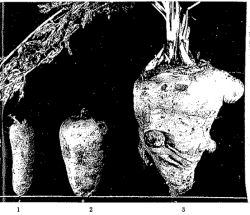
Photo : Carrots, the two left are untreated carrots, the right one is from a treated seeds of carrots. The seeds were soaked 8 hours in treated water.
He wrote a very interesting book, that you can only find in french.
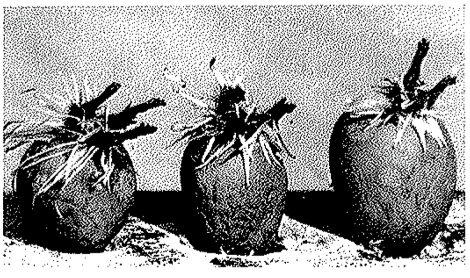
Photo below : left photo : potatoes untreated, right photo : Potatoes were sprayed with treated water. Potatoes germination is much faster and with more germs.
The Electro-Culture Committee of the Ministry of Agriculture and Fisheries of the UK
between 1918 and 1936. Its fight for acceptance.
by David Kinahan, Department of Science and Technology Studies, University College London
Summary of the article, abstract :
Since the eighteenth century, many scientists and entrepreneurs have explored the idea of using electricity to make plants grow faster. In 1918, the Ministry of Agriculture and Fisheries were so enticed by the idea that they set up a committee to investigate. Here, the work of this committee is discussed using the eighteen Interim Reports that they published between 1918 and 1936, the year that they were disbanded. Furthermore, reasons why the committee was axed, despite some considerable successes, are considered. It is concluded that the Electro-Culture effect is a real one, and that the Committee was axed as a result of economic pressures, not because the idea was wrong.
Introduction : Making crops grow larger and faster has been the primary concern of agriculture for millennia. All manner of cultivation techniques and technologies have been developed to fulfil this aim, from simple crop rotation to complex synthetic fertilisers. The enterprise of agricultural science is testament to this cause. It is therefore unsurprising to find that newly discovered technologies and phenomena have been readily applied to agricultural problems, no matter how abstract they may seem. Some of these applications are now used in everyday, orthodox farming practices, others are not. It is one of the unsuccessful applications of a new and developing technology to agriculture that is the topic of this paper, the attempt to use electricity as a 'fertiliser'.
From the mid-eighteenth century, enterprising individuals have tried to use electricity to boost plant growth because of the promise that such an inexhaustible 'substance' held. The eighteenth and nineteenth centuries saw 'Electro-Culture', as it came to be known, taking hold, with increasing efforts to prove that it worked. Many entrepreneurs involved with Electro-Culture saw statistically significant increases in the yields of their crops. The lavish claims they made gathered sufficient credence to prompt Lord Ernle, the president of the Board of Agriculture, later the Ministry of Agriculture and Fisheries (MAF), to found a committee in 1918 to see if Electro-Culture could be employed on a larger scale. Its institutionalisation, however, is the high water mark of the idea, with the Electro-Culture Committee disbanded in 1936 and the whole pursuit branded a failure. Although it saw a small resurgence in the mid-twentieth century, Electro-Culture is now very much a relic of the past. However, there is little proof that the idea is as absurd as it sounds. Much of the work carried out by the Committee saw considerable success, and the mass of results achieved then, and in the 1960s and 1970s, suggest that the growth increases seen by the Electro-Culturists were real. It is the purpose of this paper to discuss why Electro-Culture failed to be accepted as a credible technique.
With this aim in mind, this paper does not discuss much of the history preceding the foundation of the Electro-Culture Committee, the key being that events led to Lord Ernle approving the official investigation. Despite the varied history of Electro-Culture it seems the Committee's eighteen years of work decided the idea's future, and so this period is the main focus of the paper. The discussion begins with a brief description of the work of the Committee, which is based on the information contained within the Committee's eighteen Interim Reports, as well as the other records contained in the National Archives at Kew. The remainder of the paper discusses some of the reasons the Committee's work was ended in 1936, and then tries to arrive at a conclusion as to why an enterprise that had some considerable success was abandoned so completely.
The Rise of the Electro-Culture Committee In 1898, Karl Selim Lemström (1838-1904), Professor of Physics at the University of Helsinki, addressed a meeting of the British Association for the Advancement of Science in Bristol on the topic of Electro-Culture (Sidaway, 1975: 390). He had been working on the technique since the 1880s when, whilst observing the Aurora Borealis, he noted that the trees in the surrounding area grew rapidly despite the short growing season. Aware of the previous work on Electro-Culture, Lemström attributed this growth to the electrical field generated by the Aurora, and set up a number of experiments to test this hypothesis (Lemström, 1904: 1-20). The experiments involved stringing a network of positively charged wires above a crop, charged to varying potentials for different periods of time, and measuring the difference in the yields obtained compared to controls. It was the results of these experiments that were the subject of Lemström's talk, and also his book Electricity in Agriculture and Horticulture, published in English in 1904.
Lemström's results, and his 'overhead discharge technique' piqued the interest of a number of British scientists. The botanist J. H Priestley, working in cooperation with the physicist J. E. Newman, achieved a 17% increase in the yield of their cucumbers with Lemström's technique (Priestly 1906 and 1910 cited in Sidaway, 1975: 390). Sir Oliver Lodge, the famous physicist, again working with Newman, designed an eight hectare installation based on Lemström's design,[1] and achieved a 24-39% increase in wheat grain yield (Sidaway, 1975: 390). Together with more experimental work from Miss E. C. Dudgeon in Lincluden, Dumfries, and Professor V. H. Blackman at Imperial College London, these British applications and developments of Lemström's method resulted in considerable interest from the agricultural community (ibid.). It was as a result of their lobbying that Lord Ernle set up the Electro-Culture Committee in 1918.
The Committee's purpose was to advise the Minister on everything electro-cultural, with special emphasis on solving the difficulties of experimentation, the construction of suitable apparatus, and, particularly, its economic feasibility (Snell, J.et al., 1919: 2). Their aim was clear, to transform the promise held by the previous, rather informal experiments into something practical. As had been the case throughout the history of Electro-Culture, successes, although in the majority, had been accompanied by numerous failures or results that were not statistically significant even under seemingly identical conditions[2] (See Lemström, 1904; Sidaway, 1975; Porter, 1968; and Spence, 1962). Ironing-out these inconsistencies was therefore of great importance within the Committee's work, and to an extent it can be seen as its raison d'être. The stress that World War One had put Britain under, in particular the food shortages resulting from the German Atlantic campaign, made the potential yield-boosts of Electro-Culture very attractive. (Spence 1962: 150) However, the cash-strapped nation and its farmers could not put their faith in an expensive technique that had yet to be proved practicable. With this responsibility in mind, the eleven-member Committee Lord Ernle appointed consisted of an interdisciplinary mix of physicists, biologists, electrical engineers, and agriculturalists. The committee included some 6 fellows of the Royal Society, and a Nobel-Prize-winner,[3] and was chaired by Sir John Snell, an electrical engineer and Chairman of the Electricity Commission, the body responsible for shaping Britain's electricity policy (See Ross 2004).
The Programme of Work Unfortunately, due to the limits of this paper, there is not the opportunity to give a full description of the Committee's efforts. However, briefly, the Committee's work was almost entirely experimental, and took Lemström's technique as its basis.[4] Their most fundamental studies were done in the laboratory. For instance, Blackman et al. were able to establish, by growing Barley shoots in nutrient solution under highly-charged metallic points, that the optimum current through the plant was 3x10⁻⁹A, and that the increased growth-rate, in some cases, continued for as long as five hours after the current had been switched off (Blackman et al, 1923: 222-228). As well as spending considerable time in the laboratory looking at this and other problems, no time was lost in applying the results in the field.
Through a range of large-scale field trials, based at both Rothamsted and Lincluden, the committee attempted to apply their laboratory-learnt knowledge to a wide range of crops, from wheat and oats to potatoes and cabbages. These experiments differed little from those of the early electro-culturists,[5] except for one: in 1921, an 'economic installation' was built which was designed to be viable for actual farming (the cables were much higher off the ground so as not interfere with farm machinery and workers) and also to give a realistic cost for installing the apparatus (Snell, J. et al. 1922: 4). However, even though the growth results that the Committee achieved with these large-scale trials were positive, there were some serious complications.
Including Blackman's field trials on oats at Rothamsted between 1915 and 1917,[6] by 1920 the Committee had amassed quite a considerable body of data. They had run twelve experiments, eleven of which found positive increases in yield, and eight of these were between 30% and 50% (Snell, J. et al., 1920: 13). However, although the next two years saw concerted efforts to build on this excellent start, poor weather, a very wet season in 1920 and a very dry one in 1921, led to very disappointing results, the Interim Reports do not even mention them (Snell, J. et al.,1921: 2 and Snell, J. et al., 1922: 2). After experiencing yet another disappointing season in 1922, the Committee decided to abandon the large-scale fieldwork, except for what was being done on the economic installation, in favour of the smaller-scale experiments that they were also pursuing[7] (Snell, J. et al. 1923: 2 and 5-6). Although there was some work done on ' small-plot experiments' (smaller versions of the above based on concepts that would be too expensive to do on a larger scale),[8] the bulk of the small-scale work was done in 'pot-culture'. Essentially a small number of plants in pots under 'discharge nets', pot-culture allowed for a much greater degree of control (factors such as soil type, condition, and climate being more easily manipulated) as well as allowing for a far greater range of experiments in the same period of time, simply by using more pots. It was as a result of these advantages that the Committee focussed almost all of their efforts on pot-culture in 1923.
Although some pot-work had been done since 1918, it was not until 1922, in response to the frustrations of the bad weather, that these experiments were conducted on a considerable scale. It was here that the Committee made its most significant findings. In trying to establish the best time and the best length of time to apply the discharge, they achieved phenomenally high grain yields, one pot yielding an increase of 118% over the control. Along with the variability of the weather, this remarkable success was a major factor in the Committee's decision to stop working on the large-scale and concentrate their efforts on pot-culture instead, with the promise of returning to the field in 1925 (Snell, J. et al.1923: 2-3 and 5). However, this never happened. Although, over the next thirteen years, there were a few significant increases, notably when experimenting with different fertilisers in 1927 and 1929[9] when they saw some yield increases of 36%, the Committee mostly met with decreases (Snell, J. et al., 1928: 2 and 1930: 2). For instance, in 1926, 73% of experiments showed a decrease, with the results being attributed to adverse weather (Snell, J. et al., 1927: 2). 1932-35 saw no significant increases whatsoever; the Committee were only able to guess that this was the fault of fertilisers that they were using (Snell, J. et al. 1933: 2, 1934: 2, 1935: 2 and 1937: 2-3). These were the last results from the Electro-Culture Committee as it was disbanded in 1936, issuing its eighteenth and final Interim Report in February 1937.
As illustrated, there were some significant successes in the work of the Electro-Culture Committee, but they were dogged by sometimes inexplicable difficulties. The laboratory work established the bounds within which current had a positive effect upon the growth of plants; the field work showed that the electro-cultural effect was real on the large scale, although hard to control; and the pot-cultures indicated some substantial increases in yield were possible, and yet the Committee was disbanded and its results have been largely forgotten.
Analysis of the Fall of the Committee The most significant reason for theabandonment of the Committee waseconomics. They were constituted to iron-out the inconsistencies that the early experimenters had seen in order to make Electro-Culture a practical and affordable technique for British farmers. However, despite all their time, effort and money their results only seemed to confirm the contradictory and unpredictable nature of Electro-Culture, despite its initial promise. As the Committee put it in their Eighteenth and Final Interim Report:
In spite of the failures of recent years, the field results obtained some years ago and the earlier pot culture results would seem to have established the fact that the Electro-Culture effect is a real one. It would seem, however, to be of little advantage to continue the work either on economic or on scientific grounds. Increases of 20 per cent can hardly be considered economic even if obtained in most years; experiments, however, demonstrate that the regular occurrence of the effect cannot be expected. On the scientific side the erratic occurrence of the phenomena to be investigated renders their full study impossible… The Committee regret that after so exhaustive a study of this matter the practical results should be so disappointing (Snell, J. et al.1937 3-4).
As Sidaway argues, and as this quote illustrates, the Committee were bowed under considerable pressure to produce realistic results, and it eventually took its toll (Sidaway 1975: 392-3). The Development Commission was simply not prepared to fund a project that was very expensive, and did not yield tangible benefits. However, it is notable, given that the peak in the results was in 1922, that the Committee was not disbanded sooner given this pressure. For instance, after the large-scale trials were curtailed in 1923, no results of any real significance were achieved, with the possible exception of the trials of fertilisers in 1927 and 1929, yet the Committee was allowed to carry on until 1936. However, this apparent contradiction is perhaps explained by considering the sources that have formed the basis of this paper: Interim Reports are not just reproductions of the results of the Committee's experiments, but also appeals for further funding.
Every Interim Report, including the last, puts a positive spin on the results regardless of their significance. For instance, in the sixteenth report, published in June 1934, it was asserted:
The results of 1933 are similar to those of 1932 in that no significant incremental effects have been observed as a result of exposure to the positive discharge except for a slight effect on tillering and on shoot height. The negative discharge on the other hand has reduced the size of the ears and has increased the flower sterility. On the basis of grain yield and dry weight the sets exposed to a positive discharge show a markedly significant difference to the negative discharge, although the positive or the negative discharge may have given no significant difference over the controls. The detrimental effect of the negative discharge is clearly brought out. It may perhaps be tentatively suggested that the differential effect of positive and negative discharges indicates some electrical action on the transport of substance in the plant (Snell, J. et al. 1934: 2).
This piece of almost pure speculation attempts to assert that a year in which no yield increases were achieved was a success. Although the effect that this self-justification had on the Minister who read the report cannot be known, it throws some doubt on the reliability of the Interim Reports. In looking for alternative sources of information it is unfortunate that only the first four years of Committee correspondence and minutes survive, but these documents contain some interesting insights. For example, it appears that the Committee was threatened with closure on the basis of their economic output very early on.
At the end of the third Interim Report is this statement:
The Committee have received, with some concern, an intimation from the Development Commissioners that they will not be able to make any further grants after the conclusion of the present year in respect to the Committee's work. The Committee do not regard their work as complete… more experimental work requires to be done before the commercial value of the method can be decided. It is true that the beneficial effect of the overhead electrical discharge has been demonstrated so far as spring sown cereals are concerned, but the actual increase to be expected requires more exact determination before a decision as to the economic value of the process can be reached (Snell, J. et al., 1921: 4).
As this quote reveals, the Committee were genuinely concerned for the integrity of the scientific study. An anonymous handwritten scrawl on the minute sheet for that report says 'The studies continue to show very baffling results. It would be most unwise to discontinue now, only continuous work will clear up the discrepancies and the practical improbabilities.' Underneath, Mr Hale, the secretary of the Committee wrote: 'I agree. I think it is clear that this investigation must be continued, for another year at least' (MAF 33/65). This same file also contains a letter from Mr Berry, a Committee member, to Snell in which he produces a long and impassioned list of reasons for why the Committee should be allowed to continue its investigation. However, as the three Ministers of Agriculture between 1919 and 1921 were keen to point out, the Committee was not constituted to produce a thorough inquiry. Lord Ernle, on receipt of the first Interim Report, was quick to remind Snell of their true aims. In a letter he wrote in 1919 he said:
While I should have been glad to learn that the Committee had been able to reach a definite conclusion as to the effect of overhead discharge on growing crops, I fully realise that a problem of this type may demand several years of experimental work before it is possible to formulate conclusions that will be satisfying to scientists, and sufficiently reliable to enable farmers to decide whether it would be to their advantage, or not, to purchase the electrical apparatus required for Electro-Culture work.
Letters containing similar sentiments were returned to the Committee from Lord Lee and Sir Arthur Griffith-Boscawen, the Ministers for Agriculture in 1920 and 1921. Although all three were forthcoming in their support, it is clear that they firstly regarded it as a short-term project, not necessarily an in-depth scientific analysis of the topic, and secondly that they expected realistic estimates of cost and practicality. Thus it was in an economic light that the threat of closure was made. The Development Commission wanted to withdraw funding because of the lack of realistic results, so the Ministry pushed the committee to generate such results, resulting, in 1922, in the development of the 'economic installation'.
The decision to disband the Committee can therefore be seen as the result of a conflict between the desire for a thorough scientific investigation and the rush to see the investigation completed for economic gain, a concept that is not entirely unfamiliar today. It can only be assumed, thanks to the loss of correspondence from the latter years of the Committee, that similar exchanges went on throughout its existence, and that the Development Commission and the Ministry eventually lost patience and ended the Committee's work.[10] As such, economic pressure, and the fact that the Committee was seen to have failed to make Electro-Culture a practical reality were the most likely reasons for its demise in 1936.
However, another reason for the end of the Committee was the results of experiments in America. Given the potential of Electro-Culture, Britain was not the only country experimenting with it. According to their notes, the Committee were in communication with scientists working on the issue in Norway, as well as elsewhere in Europe, and their results tended to agree with what the Committee had found. However, American scientists, equally determined to realise the promise of Electro-Culture due to the food demands of their booming population, (see Spence, 1962: 150) did not see any such promising results. For instance, a lengthy study commissioned by the U. S. Department of Agriculture, and carried out by scientists from the Bureau of Plant Industry at the Arlington Experimental Farms in Virginia, yielded no positive results whatsoever (Sidaway, 1975: 392 and Spence, 1962: 150). Sidaway and Spence both argue that the findings of these experiments, published in two reports (see Briggs, 1926 and Collins, 1929), were a major contributing factor in the demise of the Committee. Although neither Sidaway nor Spence go into any detail, nor is there any mention of these reports in the Committee's Interim Reports, it seems likely that they had an influence on the Committees fate nonetheless. Such high-profile rejections from another state-backed enterprise must have been a significant blow to chances of the Committee keeping their funding. Although there is a lag between the reports and the closure of the Committee in 1936, this does not diminish Spence and Sidaway's conclusion. The American reports would have reinforced the Development Commission's notion that Electro-Culture actually had little economic promise.
However, this American research raises the question of why the results on either side of the Atlantic differed to such a degree. Sidaway suggests a very plausible solution. As one of the researchers who worked on Electro-Culture in the 1960s and 70s, Sidaway argues that the changes in photoperiodicity inherent in the shifting seasons, as well as the differing patterns of shocks of low temperature that occur in spring and autumn, have a significant effect on the way a plant responds to light and other forms of electromagnetism (Sidaway 1975: 392). He argues that autumn-sown crops, which experience many fewer shocks of lower temperatures during germination and early growth than their spring-sown equivalents, and are subjected to a photoperiodic pattern that shifts from long to short days rather than the other way round, will not be ideally suited to Electro-Culture. This spring-sown bias was a phenomenon that the Committee had identified by 1925, although they did not know why it happened, but had largely ignored it as the British climate made autumn-sown crops such a rarity. However, the American researchers, working under much more reliable weather conditions, were able to experiment on both varieties. Sidaway argues that they were so fixated on the negative results obtained from their autumn-sown crops that they disregarded the inconsistent positives that they obtained in spring (ibid.). Crucially, though, the reason that all of the experimental work, British and American alike, was dogged by inconsistency was because the experimenters were working without a proper 'conceptual framework' (ibid: 391). They did not truly understand why they saw the effects they did, and so had little hope of ever actually making Electro-Culture a practical solution, something which becomes clearer still when the work that was done in the 1960s and 1970s is considered.
Article of Krueger et al.
After the demise of the Committee in 1936, very little work was done on Electro-Culture until 1962. In a series of papers Krueger, Kotaka and Andriese working at the University of California at Berkeley, Murr working at Pennsylvania State University, and Sidaway and Asprey working at University College Cardiff established that gaseous ions were responsible for the effects seen in Electro-Culture. For instance, in 1962 Krueger et al. picked up on Blackman et al.'s laboratory work from 1923 described above, and showed, using newly developed technology, that ions produced from a clean source of radiation were enough to set up a physiological reaction in plants very similar to those the Committee saw (Krueger et al.,1962: 38). Although the fact that the reaction was ion-mediated would have been known by the Committee (since it was the only way electricity could have reached the plants) this was the first time that it had been so succinctly demonstrated (Pohl, 1978: 6). Murr showed that the ions caused an increase in trace elements such as Iron, Zinc and Aluminium in plants; these elements are only associated with certain metabolic enzymes, suggesting a profound physiological response (Murr 1964: 1306). Further work in this area, concisely summarised by Pohl (1978), demonstrates the mechanisms that Electro-Culture operates through are highly complex, involving biochemical concepts that were little understood in the 1920s and 1930s. The understanding of enzymes, for instance, was only just beginning to mature, including the technology required to study them.
Andrew Goldsworthy
It is only recently that a reasonably full physiological mechanism for Electro-Culture has been put forward. Andrew Goldsworthy, a specialist in plant biotechnology at Imperial College, suggested in 2006 that what is seen in Electro-Cultural experiments is a plant's natural reaction to a brewing thunderstorm. Building on the work done in the 1960s and 1970s, he argues that if a plant is to make best use of the water supplied by a thunderstorm, especially if it grows in dry conditions, then it will be a selective advantage to respond quickly before it drains away. The 16 kV/m voltage gradients under thunderclouds are thus an excellent signal of imminent heavy precipitation. Significantly, these are strikingly similar to those that the Committee found in the laboratory to be effective in Electro-Culture, as they are sufficient to establish a current of around 3x10⁻⁹A through the plants on the ground, thus suggesting that the Electro-Cultural effect that the Committee and others were studying was actually a physiological response evolved though plant competition for water in dry climates. If the plant is subjected to such an electric field, genes are activated which promote metabolic activity, generating enzymes for example, and increase the permeability of the cell membranes of the roots ready for the water. As such, Goldsworthy argues that an essential part of electroculture must be a ready supply of water, at the latest four hours after electrification and that electrifying the plants in dry conditions is likely to harm them as they will waste so much energy (Goldsworthy, 2006: 248-9). He argues that given that the American researchers switched off the electric current if rain was forecast, it was not at all surprising that they only achieved negative results[11] (ibid.: 249). These later discoveries indicate that the Committee, and other electro-culturists of the time, had a significant gap in their knowledge and an inadequate conceptual framework in place, perhaps even more inadequate than Sidaway suspected.
Therefore, at the time the Electro-Culture Committee was constituted, it was unlikely that they could ever have fully understood Electro-Culture as was their aim. Their view, as dictated by their brief, was empirical, so they tackled the complexities of Electro-Culture by amassing a great deal of experimental results, thereby hoping to arrive at the best, most reliable method. As a result of this, their work was devoid of any form of theory as to why electricity had the effects that they observed. For instance, it was only in 1925, six years into their experiments, that the Committee began to consider the physiological effect of the electricity on the plants at all, and only then did they consider the gross effects and why this led to an increase in yield.[12] There was no attempt to explain the effects observed. This approach is entirely understandable given that in 1918 the whole problem of Electro-Culture would have simply seemed to be one of ironing-out the inconsistencies by finding the appropriate times and durations for electrification. This understandably flawed approach, combined with the high-profile depreciatory results from America, seem likely to have colluded with the strong economic drive of the Development Commission in causing the downfall of Committee despite the fact that their results showed some considerable promise.
However, this reasoning for the Committee's disbandment in the face of their 'confirmation' that the technique has a positive effect does not account for why Electro-Culture has since faded into history. Here, it seems likely that the Committee were perceived as having failed to 'tame' Electro-Culture, and thus it subsequently gained a reputation for being a curious but unreliable phenomenon and pursuing it was seen as a waste of time, lacking any prestige. Among the biographers of the most prominent Committee members, only two take the time to mention the Committee, suggesting that this perception of the Committee's work is, even now, pervasive. Snell's biographer only mentions in passing that he was chairman, dwarfed amongst his other responsibilities (Ross, 2004). Only one of Blackman's biographers mentions Electro-Culture and then as a rather inconvenient distraction from his otherwise more worthwhile work (Porter, 1968: 51-2). Although Porter makes some interesting observations about Blackman's significant contributions to the Committee, she suggests that as soon as it became clear that the Committee was making little progress in making Electro-Culture practicable, he resigned all interest and focussed his effort on other projects. This rather Popperian interpretation seems to ignore Blackman's significant analytical appendices that were a prominent feature of every Interim Report until the Committee was disbanded. These do not seem to be the work of a disinterested, preoccupied scientist. What is more likely is that the work of the Committee, and indeed Electro-Culture as a whole, came to be seen as failed science, and hence has been forgotten.
However, this perceived disproval of the science of Electro-Culture does not alone account for its disappearance. If the results of the Committee's work were in the public domain, it is reasonable to suggest that their many positives would have been taken as indicative of something substantial. Instead, Electro-Culture remained almost untouched until the 1960s and 70s because from the fourth Interim Report in 1922, the reports were all marked 'not for publication'. From this point on, for the rest of the Committee's existence, only two copies of each report were printed, one for the Minister, the other for the Ministry archives. Although a limited number of edited summaries were made available upon request, unrestricted access to the Committee's work and results was effectively impossible, despite the fact that the work was not officially 'classified'. Although the reasons for this are uncertain, it is reasonable to suggest, as Sidaway does, that here Snell's dual role as chairman of both the Electro-Culture Committee and the Electricity Commission may begin to conflict (Sidaway, 1995: 69 and Sidaway, 2008). Given that one of the main roles of the Electricity Commission was to negotiate and oversee the building of the National Grid, and that there was already considerable opposition to this on aesthetic and safety grounds, publishing results which suggested that the overhead lines might also cause significant bioactivity may not have been wise. Snell's conflict of interest between his two projects, then, dictated that the Committee's reports be made private in order to make sure that the National Grid could go ahead. Although this could be seen as a rather cynical interpretation of events, it seems reasonable to suggest that such a conflict of interest could have been significant and it is certainly one explanation for the non-publication of the remainder of the Committee's work. Whatever the reason, though, it is likely that this non-publication contributed to the illusion that Electro-Culture was a failed science, perpetuating the idea that the Committee failed in taming Electro-Culture because it was impossible to do so, not for the reasons outlined above. It is not known how long the reports languished unseen in the archives, but the 'Thirty-Year Rule'[13] might suggest that it is not a coincidence that Electro-Culture began to resurface, albeit briefly, in the 1960s.
Conclusions about the Electroculture Committee of UK
This paper has attempted to explain why the Electro-Culture Committee was disbanded in 1936, and why their work has since faded into history despite their apparent conformation that Electro-Culture had a positive effect. The approach that the Committee took and their understandable lack of detailed biochemical and biophysical knowledge meant that they pursued an empirical approach that could not reach any form of practicable method of carrying out Electro-Culture based on Lemström's technique. This was not acceptable to the Ministry of Agriculture and the Development Commission who were looking for practical results, especially in the face of some high-profile depreciatory results from other scientists overseas. Thus, what was seen as the failure of Electro-Culture was actually the failure of the Committee to fulfil its brief. The Electro-Cultural effect is real, and the Committee confirmed this through their careful experiments in the laboratory and in the field. However, the painstaking research and epistemic revolutions required to understand the mechanisms of Electro-Culture were well beyond what a civil-service Committee could hope to achieve. That Electro-Culture has not been revisited since is perhaps a result of the perceived failure of the Committee to confirm the technique, amplified by the fact that the Committee's work remained hidden for so long, possibly as a result of Snell's conflict of interest in his dual roles as chairman of the Electro-Culture Committee and the Electricity Commission. The damage done to the reputation of the science of Electro-Culture, despite the apparent promise of all the work outlined above, has seen it fade into history, thrown in amongst the hundreds of other such failed enterprises. However, as further work has suggested, it seems likely that Electro-Culture could still be employed profitably, especially now that electricity is much cheaper and more easily available. Perhaps given our greater understanding of the topic, it is time for a return to the ' electric fields'.
Acknowledgements My thanks go to Professor Hasok Chang, University College London, for his supervision and input in putting together this paper.
Notes [1] Sidaway notes that this was the forerunner of several commercially supplied 'Lodge-Newman Installations' around the country (Sidaway, 1975: 390). However, he does not reference this fact.
[2] For instance, Lemström said in 1904, summarising his own work as much as that of his predecessors, 'the most striking feature of [electro-cultural] experiments is that they are always contradictory' (Lemström, 1904: 8, Emphasis in original).
[3] The six Fellows of the Royal Society were the extremely influential cytologist and plant physiologist Professor V. H. Blackman (1872-1967) who had already done a good deal of experimental work on Electro-Culture (see Porter, 1968; and Brassley, 2004); the physicist Dr C. Chree, (1860-1928) winner of the Hughes Medal in 1919 for his researches in terrestrial magnetism; the physicist and electrical engineer Dr W. H. Eccles (1875-1966) who was a specialist in wireless radio transmission and the passage of radiation through the air (see Ratcliffe and Procter, 2004); the electrical engineer Professor T. Mather (1856-1937) known for his work on the measurement of electricity and the refinement of instruments for this purpose (see Sumpner, 1938); the agricultural scientist E. J. Russell (1872-1965), director of the Rothamsted Experimental Station (see Thornton, 1966); and the physicist Professor C. T. R. Wilson (1869-1959) renowned for his work on cloud chambers and the study of the passage of ions through air, work for which he shared the Nobel Prize for Physics in 1927, as well as winning numerous other awards including the Royal Society's Hughes Medal in 1911, a Royal Medal in 1922 and the Copley Medal in 1935 (see Longair, 2004; and Blackett, 1960).
[4] Their reasoning for this, at least as recorded in their first Interim Report in 1919, and indeed in each subsequent one until 1937, was: 'In view of the complexity of the subject the Committee have confined their experiments during the period under review to Electro-Culture by means of overhead discharge' (Snell, J. et al.,1919: 2). As this implies, and as it is important to remember, there were numerous other techniques throughout the history of Electro-Culture, and the Committee simply picked the one that they saw to have the greatest chance of success.
[5] As such, the installations at Lincluden and Rothamsted involved a mesh of cables, approximately 0.3mm in diameter, strung between poles at about 2m above the ground. The cables were charged using a petrol-driven generator, with the positive terminal attached to the cables and the negative terminal attached to the earth, to establish a field strength of between 10-20kV/m, enough to create a current of 3x10⁻⁹A within each individual plant which, as shown above, was established as the optimal amount of current to encourage growth (Snell, J.et al.,1920: 12).
[6] These results are described in quite some depth in appendix 2 of the third Interim Report in 1921.
[7] It is important to note, though, that they fully intended to return to large-scale experimentation, it was not an admission of defeat. They argued that given the drastic effects of the weather on the reliability of the results, something that they didn't fully understand, they would experiment under more controllable conditions until they did. They believed that it would only take two years, 1923 and 1924, to make sufficient progress in their understanding of Electro-Culture to allow them to return to the larger-scale in 1925 (Snell, J. et al.,1923: 6).
[8] For instance, one, setup in 1918 and referred to as the 'caged-plot experiment', involved the construction of something akin to a Faraday Cage of earthed wires around an area of land of about 1/40thacre which aimed to gauge the effect of the Earth's magnetic field on the crops (Snell, J. et al.,1919: 4). However, the results were mixed as they showed that the yields of the crops grown within the cage were 5% lower than that of the electrified fields, but 5% higher than the control plot. The same experiment in 1919 saw much lower yields than both the control and electrified plots, but this was put down to poor conditions (Snell, J. et al.,1920: 7-8). Therefore, it was concluded that the results were insignificant and, after 1920, this experiment was not repeated.
[9] No results were recorded in 1928 as many of the plants were attacked by 'rust'. As such, the Committee concluded that any results seen were insignificant, with the only real conclusion that they needed to take greater steps to avoid disease (Snell, J. et al.,1929: 2).
[10] A significant factor in this may well have been the costings that were returned for the economic installation that suggested that for a farmer to put an equivalent system in place the cost would be around £10 an acre in equipment alone. Considering this would not have included the cost of generating the electricity, and taking into account inflation, it was concluded that Electro-Culture was very expensive.
[11] Equally, though, this explains other oddities experienced by the Committee. For example, Blackman et al.'s (1923) observation that there was a sustained after-effect of electrification that could be explained because the Barley shoots were growing in a nutrient solution, and thus had a plentiful supply of water. This, too, explains the results of 1921, one of the driest seasons experienced for some time, a set of results that contributed to the abandonment of the large-scale field trials.
[12] They concluded that electricity reduced the amount of sterile flowers in the ears of the crops, as well as reducing the amount of tillers, shoots that form at the base of the stalk thus representing unnecessary growth, and as such there was an increase in the yield (Snell, J. et al.,1926: 3; and Snell, J. et al.,1930: 2).
[13] The 'Thirty-Year Rule' is the guideline used by the British government for when documents are to be made available to the public. So, for instance, government documents from the 1970s are only now being made available in the National Archives at Kew. This 'rule' was introduced by Harold Wilson's government who amended the 'Public Records Act 1958' in 1967, revising the time limit down from the previous 'Fifty-Year Rule'. Therefore, the Interim Reports of the Electro-Culture Committee would have become eligible for release in 1967.
References
All letters and notes from the minutes come from one file stored in the National Archives at Kew under MAF 33/65
Blackman, V. H., A. T. Legg, and F. G. Gregory (1923), 'The Effect of Direct Current of Very Low Intensity on the Rate of Growth of the Coleoptile of Barley', Proceedings of the Royal Society of London B,95, 214-228
Brassley, P. (2004), 'Blackman, Vernon Herbert (1972-1967)', The Oxford Dictionary of National Biography,http://www.oxforddnb.com/view/printable/36178.com, [accessed 16 March 2008]
Chree, C. (1920), 'An Electro-Culture Problem', Proceedings of the Physical Society of London,33, 377-87
Goldsworthy, A. (2006), 'Effects of Electrical and Electromagnetic Fields on Plants and Related Topics', in Volkov, A. G. (eds.), Plant Electrophysiology: Theory and Methods, Berlin: Springer
Krueger, A. P., S. Kotaka and P. C. Andriese (1962), 'Some Observations on the Physiological Effects of Gaseous Ions', International Journal of Biometeorology,6 (1), 33-48
Lemström, K. S. (1904), Electricity in Agriculture and Horticulture, London: Electrician Publications
Longair, M. S. (2004), 'Wilson, Charles Thomson Rees (1869-1959)', The Oxford Dictionary of National Biography, http://www.oxforddnb.com/view/printable/36178.com, [accessed 16 March 2008]
Murr, L. E. (1964), 'Mechanism of Plant-Cell Damage in an Electrostatic Field', Nature,201, 1305-1306
Pohl, H. A. (1977), 'Electroculture, Journal of Biological Physics,5 (1), 3-21
Porter, H. K. (1968), 'Vernon Herbert Blackman. 1872-1967,Biographical Memoirs of Fellows of the Royal Society, 14, 37-60
Ratcliffe, J. A. and T. Procter (2004), 'Eccles, William Henry (1875-1966)', The Oxford Dictionary of National Biography,http://www.oxforddnb.com/view/printable/36178.com, [accessed 16 March 2008]
Ross, H. M. (2004), 'Snell, Sir John Francis (1869-1938)', The Oxford Dictionary of National Biography, http://www.oxforddnb.com/view/printable/36178.com, [accessed 16/03/2008]
Sidaway, G. H. (1975), 'Some Early Experiments in Electro-Culture', Journal of Electrostatics, 1, 389-393
Sidaway, G. H. (1995), 'Electric Hazards', New Scientist, 7 October 1995, p. 69
Sidaway, G. H. (2008), ' Environmental and Social Impacts of Electricity Utilization: Broadening the Debate', Environmentalist,28, 307-318
Snell, J., A. F. Berry, V. H Blackman, A. B. Bruce, C. Chree, W. R. Cooper, W. H. Eccles, J. S. Highfield, T. Mather, E. J. Russell and C. T. R. Wilson (1919), The First Interim Report of the Electro-Culture Committee, held at the National Archives, Kew, under MAF 33/913
Snell, J., A. F. Berry, V. H. Blackman, A. B. Bruce, C. Chree, W. R. Cooper, W. H. Eccles, J. S. Highfield, G. W. O. Howe, T. Mather, E. J. Russell and C. T. R. Wilson (1920), The Second Interim Report of the Electro-Culture Committee, held at the National Archives, Kew, under MAF 33/913
Snell, J., A. F. Berry, V. H. Blackman, A. B. Bruce, C. Chree, W. R. Cooper, W. H. Eccles, J. S. Highfield, G. W. O. Howe, T. Mather, B. J. Owen, H. G. Richardson, E. J. Russell and C. T. R. Wilson (1921), The Third Interim Report of the Electro-Culture Committee, held at the National Archives, Kew, under MAF 33/913
Snell, J., A. F. Berry, V. H. Blackman, A. B. Bruce, C. Chree, W. H. Eccles, J. S. Highfield, G. W. O. Howe, T. Mather, B. J. Owen, H. G. Richardson, E. J. Russell and C. T. R. Wilson (1926), The Eighth Interim Report of the Electro-Culture Committee, held at the National Archives, Kew, under MAF 33/913
Snell, J., A. F. Berry, V. H. Blackman, W. H. Eccles, J. S. Highfield, G. W. O. Howe, T. Mather, B. J. Owen, H. G. Richardson, E. J. Russell and C. T. R. Wilson (1928), The Tenth Interim Report of the Electro-Culture Committee, held at the National Archives, Kew, under MAF 33/913
Snell, J., A. F. Berry, V. H. Blackman, W. H. Eccles, J. S. Highfield, G. W. O. Howe, H. G. Richardson, E. J. Russell and C. T. R. Wilson (1931), The Thirteenth Interim Report of the Electro-Culture Committee, held at the National Archives, Kew, under MAF 33/913
Snell, J., A. F. Berry, V. H. Blackman, W. H. Eccles, J. S. Highfield, G. W. O. Howe, E. J. Russell, V. E. Wilkins and C. T. R. Wilson (1933), The Fifteenth Interim Report of the Electro-Culture Committee, held at the National Archives, Kew, under MAF 33/913
Spence, C. C. (1962), 'Early Uses of Electricity in American Agriculture', Technology and Culture, 3 (2), 142-160
Sumpner, W. E. (1938), 'Thomas Mather. 1856-1937', Obituary Notices of Fellows on the Royal Society,2 (6), 380-4
Thornton, H. G. (1966), 'Edward John Russell. 1872-1965', Biographical Memoirs of Fellows of the Royal Society, 12, 456-77
(1922), The Fourth Interim Report of the Electro-Culture Committee, held at the National Archives, Kew, under MAF 33/913
(1923), The Fifth Interim Report of the Electro-Culture Committee, held at the National Archives, Kew, under MAF 33/913
(1924), The Sixth Interim Report of the Electro-Culture Committee, held at the National Archives, Kew, under MAF 33/913
(1925), The Seventh Interim Report of the Electro-Culture Committee, held at the National Archives, Kew, under MAF 33/913
(1927), The Ninth Interim Report of the Electro-Culture Committee, held at the National Archives, Kew, under MAF 33/913
(1929), The Eleventh Interim Report of the Electro-Culture Committee, held at the National Archives, Kew, under MAF 33/913
(1930), The Twelfth Interim Report of the Electro-Culture Committee, held at the National Archives, Kew, under MAF 33/913
(1932), The Fourteenth Interim Report of the Electro-Culture Committee, held at the National Archives, Kew, under MAF 33/913
(1934), The Sixteenth Interim Report of the Electro-Culture Committee, held at the National Archives, Kew, under MAF 33/913
(1935), The Seventeenth Interim Report of the Electro-Culture Committee, held at the National Archives, Kew, under MAF 33/913
(1936), The Eighteenth and Final Interim Report of the Electro-Culture Committee, held at the National Archives, Kew, under MAF 33/913
Kinahan, D. (2009), ‘Struggling to Take Root: The Work of the Electro-Culture Committee of the Ministry of Agriculture and Fisheries Between 1918 and 1936 and its Fight for Acceptance', Reinvention: a Journal of Undergraduate Research, Volume 2, Issue 1, http://www2.warwick.ac.uk/go/reinventionjournal/issues/volume2issue1/kinahan Date accessed [28-05-2010].
Photo below : Big Antenna to increase the fertility of agriculture fields with the use of the electricity collected from the air.
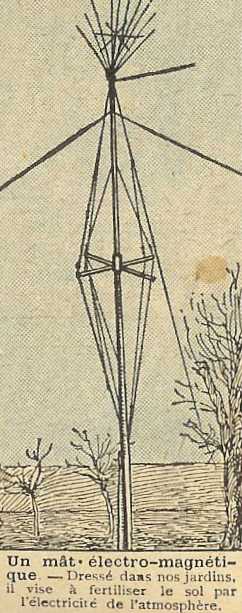
Summary of the article, abstract :
Since the eighteenth century, many scientists and entrepreneurs have explored the idea of using electricity to make plants grow faster. In 1918, the Ministry of Agriculture and Fisheries were so enticed by the idea that they set up a committee to investigate. Here, the work of this committee is discussed using the eighteen Interim Reports that they published between 1918 and 1936, the year that they were disbanded. Furthermore, reasons why the committee was axed, despite some considerable successes, are considered. It is concluded that the Electro-Culture effect is a real one, and that the Committee was axed as a result of economic pressures, not because the idea was wrong.
Introduction : Making crops grow larger and faster has been the primary concern of agriculture for millennia. All manner of cultivation techniques and technologies have been developed to fulfil this aim, from simple crop rotation to complex synthetic fertilisers. The enterprise of agricultural science is testament to this cause. It is therefore unsurprising to find that newly discovered technologies and phenomena have been readily applied to agricultural problems, no matter how abstract they may seem. Some of these applications are now used in everyday, orthodox farming practices, others are not. It is one of the unsuccessful applications of a new and developing technology to agriculture that is the topic of this paper, the attempt to use electricity as a 'fertiliser'.
From the mid-eighteenth century, enterprising individuals have tried to use electricity to boost plant growth because of the promise that such an inexhaustible 'substance' held. The eighteenth and nineteenth centuries saw 'Electro-Culture', as it came to be known, taking hold, with increasing efforts to prove that it worked. Many entrepreneurs involved with Electro-Culture saw statistically significant increases in the yields of their crops. The lavish claims they made gathered sufficient credence to prompt Lord Ernle, the president of the Board of Agriculture, later the Ministry of Agriculture and Fisheries (MAF), to found a committee in 1918 to see if Electro-Culture could be employed on a larger scale. Its institutionalisation, however, is the high water mark of the idea, with the Electro-Culture Committee disbanded in 1936 and the whole pursuit branded a failure. Although it saw a small resurgence in the mid-twentieth century, Electro-Culture is now very much a relic of the past. However, there is little proof that the idea is as absurd as it sounds. Much of the work carried out by the Committee saw considerable success, and the mass of results achieved then, and in the 1960s and 1970s, suggest that the growth increases seen by the Electro-Culturists were real. It is the purpose of this paper to discuss why Electro-Culture failed to be accepted as a credible technique.
With this aim in mind, this paper does not discuss much of the history preceding the foundation of the Electro-Culture Committee, the key being that events led to Lord Ernle approving the official investigation. Despite the varied history of Electro-Culture it seems the Committee's eighteen years of work decided the idea's future, and so this period is the main focus of the paper. The discussion begins with a brief description of the work of the Committee, which is based on the information contained within the Committee's eighteen Interim Reports, as well as the other records contained in the National Archives at Kew. The remainder of the paper discusses some of the reasons the Committee's work was ended in 1936, and then tries to arrive at a conclusion as to why an enterprise that had some considerable success was abandoned so completely.
The Rise of the Electro-Culture Committee In 1898, Karl Selim Lemström (1838-1904), Professor of Physics at the University of Helsinki, addressed a meeting of the British Association for the Advancement of Science in Bristol on the topic of Electro-Culture (Sidaway, 1975: 390). He had been working on the technique since the 1880s when, whilst observing the Aurora Borealis, he noted that the trees in the surrounding area grew rapidly despite the short growing season. Aware of the previous work on Electro-Culture, Lemström attributed this growth to the electrical field generated by the Aurora, and set up a number of experiments to test this hypothesis (Lemström, 1904: 1-20). The experiments involved stringing a network of positively charged wires above a crop, charged to varying potentials for different periods of time, and measuring the difference in the yields obtained compared to controls. It was the results of these experiments that were the subject of Lemström's talk, and also his book Electricity in Agriculture and Horticulture, published in English in 1904.
Lemström's results, and his 'overhead discharge technique' piqued the interest of a number of British scientists. The botanist J. H Priestley, working in cooperation with the physicist J. E. Newman, achieved a 17% increase in the yield of their cucumbers with Lemström's technique (Priestly 1906 and 1910 cited in Sidaway, 1975: 390). Sir Oliver Lodge, the famous physicist, again working with Newman, designed an eight hectare installation based on Lemström's design,[1] and achieved a 24-39% increase in wheat grain yield (Sidaway, 1975: 390). Together with more experimental work from Miss E. C. Dudgeon in Lincluden, Dumfries, and Professor V. H. Blackman at Imperial College London, these British applications and developments of Lemström's method resulted in considerable interest from the agricultural community (ibid.). It was as a result of their lobbying that Lord Ernle set up the Electro-Culture Committee in 1918.
The Committee's purpose was to advise the Minister on everything electro-cultural, with special emphasis on solving the difficulties of experimentation, the construction of suitable apparatus, and, particularly, its economic feasibility (Snell, J.et al., 1919: 2). Their aim was clear, to transform the promise held by the previous, rather informal experiments into something practical. As had been the case throughout the history of Electro-Culture, successes, although in the majority, had been accompanied by numerous failures or results that were not statistically significant even under seemingly identical conditions[2] (See Lemström, 1904; Sidaway, 1975; Porter, 1968; and Spence, 1962). Ironing-out these inconsistencies was therefore of great importance within the Committee's work, and to an extent it can be seen as its raison d'être. The stress that World War One had put Britain under, in particular the food shortages resulting from the German Atlantic campaign, made the potential yield-boosts of Electro-Culture very attractive. (Spence 1962: 150) However, the cash-strapped nation and its farmers could not put their faith in an expensive technique that had yet to be proved practicable. With this responsibility in mind, the eleven-member Committee Lord Ernle appointed consisted of an interdisciplinary mix of physicists, biologists, electrical engineers, and agriculturalists. The committee included some 6 fellows of the Royal Society, and a Nobel-Prize-winner,[3] and was chaired by Sir John Snell, an electrical engineer and Chairman of the Electricity Commission, the body responsible for shaping Britain's electricity policy (See Ross 2004).
The Programme of Work Unfortunately, due to the limits of this paper, there is not the opportunity to give a full description of the Committee's efforts. However, briefly, the Committee's work was almost entirely experimental, and took Lemström's technique as its basis.[4] Their most fundamental studies were done in the laboratory. For instance, Blackman et al. were able to establish, by growing Barley shoots in nutrient solution under highly-charged metallic points, that the optimum current through the plant was 3x10⁻⁹A, and that the increased growth-rate, in some cases, continued for as long as five hours after the current had been switched off (Blackman et al, 1923: 222-228). As well as spending considerable time in the laboratory looking at this and other problems, no time was lost in applying the results in the field.
Through a range of large-scale field trials, based at both Rothamsted and Lincluden, the committee attempted to apply their laboratory-learnt knowledge to a wide range of crops, from wheat and oats to potatoes and cabbages. These experiments differed little from those of the early electro-culturists,[5] except for one: in 1921, an 'economic installation' was built which was designed to be viable for actual farming (the cables were much higher off the ground so as not interfere with farm machinery and workers) and also to give a realistic cost for installing the apparatus (Snell, J. et al. 1922: 4). However, even though the growth results that the Committee achieved with these large-scale trials were positive, there were some serious complications.
Including Blackman's field trials on oats at Rothamsted between 1915 and 1917,[6] by 1920 the Committee had amassed quite a considerable body of data. They had run twelve experiments, eleven of which found positive increases in yield, and eight of these were between 30% and 50% (Snell, J. et al., 1920: 13). However, although the next two years saw concerted efforts to build on this excellent start, poor weather, a very wet season in 1920 and a very dry one in 1921, led to very disappointing results, the Interim Reports do not even mention them (Snell, J. et al.,1921: 2 and Snell, J. et al., 1922: 2). After experiencing yet another disappointing season in 1922, the Committee decided to abandon the large-scale fieldwork, except for what was being done on the economic installation, in favour of the smaller-scale experiments that they were also pursuing[7] (Snell, J. et al. 1923: 2 and 5-6). Although there was some work done on ' small-plot experiments' (smaller versions of the above based on concepts that would be too expensive to do on a larger scale),[8] the bulk of the small-scale work was done in 'pot-culture'. Essentially a small number of plants in pots under 'discharge nets', pot-culture allowed for a much greater degree of control (factors such as soil type, condition, and climate being more easily manipulated) as well as allowing for a far greater range of experiments in the same period of time, simply by using more pots. It was as a result of these advantages that the Committee focussed almost all of their efforts on pot-culture in 1923.
Although some pot-work had been done since 1918, it was not until 1922, in response to the frustrations of the bad weather, that these experiments were conducted on a considerable scale. It was here that the Committee made its most significant findings. In trying to establish the best time and the best length of time to apply the discharge, they achieved phenomenally high grain yields, one pot yielding an increase of 118% over the control. Along with the variability of the weather, this remarkable success was a major factor in the Committee's decision to stop working on the large-scale and concentrate their efforts on pot-culture instead, with the promise of returning to the field in 1925 (Snell, J. et al.1923: 2-3 and 5). However, this never happened. Although, over the next thirteen years, there were a few significant increases, notably when experimenting with different fertilisers in 1927 and 1929[9] when they saw some yield increases of 36%, the Committee mostly met with decreases (Snell, J. et al., 1928: 2 and 1930: 2). For instance, in 1926, 73% of experiments showed a decrease, with the results being attributed to adverse weather (Snell, J. et al., 1927: 2). 1932-35 saw no significant increases whatsoever; the Committee were only able to guess that this was the fault of fertilisers that they were using (Snell, J. et al. 1933: 2, 1934: 2, 1935: 2 and 1937: 2-3). These were the last results from the Electro-Culture Committee as it was disbanded in 1936, issuing its eighteenth and final Interim Report in February 1937.
As illustrated, there were some significant successes in the work of the Electro-Culture Committee, but they were dogged by sometimes inexplicable difficulties. The laboratory work established the bounds within which current had a positive effect upon the growth of plants; the field work showed that the electro-cultural effect was real on the large scale, although hard to control; and the pot-cultures indicated some substantial increases in yield were possible, and yet the Committee was disbanded and its results have been largely forgotten.
Analysis of the Fall of the Committee The most significant reason for theabandonment of the Committee waseconomics. They were constituted to iron-out the inconsistencies that the early experimenters had seen in order to make Electro-Culture a practical and affordable technique for British farmers. However, despite all their time, effort and money their results only seemed to confirm the contradictory and unpredictable nature of Electro-Culture, despite its initial promise. As the Committee put it in their Eighteenth and Final Interim Report:
In spite of the failures of recent years, the field results obtained some years ago and the earlier pot culture results would seem to have established the fact that the Electro-Culture effect is a real one. It would seem, however, to be of little advantage to continue the work either on economic or on scientific grounds. Increases of 20 per cent can hardly be considered economic even if obtained in most years; experiments, however, demonstrate that the regular occurrence of the effect cannot be expected. On the scientific side the erratic occurrence of the phenomena to be investigated renders their full study impossible… The Committee regret that after so exhaustive a study of this matter the practical results should be so disappointing (Snell, J. et al.1937 3-4).
As Sidaway argues, and as this quote illustrates, the Committee were bowed under considerable pressure to produce realistic results, and it eventually took its toll (Sidaway 1975: 392-3). The Development Commission was simply not prepared to fund a project that was very expensive, and did not yield tangible benefits. However, it is notable, given that the peak in the results was in 1922, that the Committee was not disbanded sooner given this pressure. For instance, after the large-scale trials were curtailed in 1923, no results of any real significance were achieved, with the possible exception of the trials of fertilisers in 1927 and 1929, yet the Committee was allowed to carry on until 1936. However, this apparent contradiction is perhaps explained by considering the sources that have formed the basis of this paper: Interim Reports are not just reproductions of the results of the Committee's experiments, but also appeals for further funding.
Every Interim Report, including the last, puts a positive spin on the results regardless of their significance. For instance, in the sixteenth report, published in June 1934, it was asserted:
The results of 1933 are similar to those of 1932 in that no significant incremental effects have been observed as a result of exposure to the positive discharge except for a slight effect on tillering and on shoot height. The negative discharge on the other hand has reduced the size of the ears and has increased the flower sterility. On the basis of grain yield and dry weight the sets exposed to a positive discharge show a markedly significant difference to the negative discharge, although the positive or the negative discharge may have given no significant difference over the controls. The detrimental effect of the negative discharge is clearly brought out. It may perhaps be tentatively suggested that the differential effect of positive and negative discharges indicates some electrical action on the transport of substance in the plant (Snell, J. et al. 1934: 2).
This piece of almost pure speculation attempts to assert that a year in which no yield increases were achieved was a success. Although the effect that this self-justification had on the Minister who read the report cannot be known, it throws some doubt on the reliability of the Interim Reports. In looking for alternative sources of information it is unfortunate that only the first four years of Committee correspondence and minutes survive, but these documents contain some interesting insights. For example, it appears that the Committee was threatened with closure on the basis of their economic output very early on.
At the end of the third Interim Report is this statement:
The Committee have received, with some concern, an intimation from the Development Commissioners that they will not be able to make any further grants after the conclusion of the present year in respect to the Committee's work. The Committee do not regard their work as complete… more experimental work requires to be done before the commercial value of the method can be decided. It is true that the beneficial effect of the overhead electrical discharge has been demonstrated so far as spring sown cereals are concerned, but the actual increase to be expected requires more exact determination before a decision as to the economic value of the process can be reached (Snell, J. et al., 1921: 4).
As this quote reveals, the Committee were genuinely concerned for the integrity of the scientific study. An anonymous handwritten scrawl on the minute sheet for that report says 'The studies continue to show very baffling results. It would be most unwise to discontinue now, only continuous work will clear up the discrepancies and the practical improbabilities.' Underneath, Mr Hale, the secretary of the Committee wrote: 'I agree. I think it is clear that this investigation must be continued, for another year at least' (MAF 33/65). This same file also contains a letter from Mr Berry, a Committee member, to Snell in which he produces a long and impassioned list of reasons for why the Committee should be allowed to continue its investigation. However, as the three Ministers of Agriculture between 1919 and 1921 were keen to point out, the Committee was not constituted to produce a thorough inquiry. Lord Ernle, on receipt of the first Interim Report, was quick to remind Snell of their true aims. In a letter he wrote in 1919 he said:
While I should have been glad to learn that the Committee had been able to reach a definite conclusion as to the effect of overhead discharge on growing crops, I fully realise that a problem of this type may demand several years of experimental work before it is possible to formulate conclusions that will be satisfying to scientists, and sufficiently reliable to enable farmers to decide whether it would be to their advantage, or not, to purchase the electrical apparatus required for Electro-Culture work.
Letters containing similar sentiments were returned to the Committee from Lord Lee and Sir Arthur Griffith-Boscawen, the Ministers for Agriculture in 1920 and 1921. Although all three were forthcoming in their support, it is clear that they firstly regarded it as a short-term project, not necessarily an in-depth scientific analysis of the topic, and secondly that they expected realistic estimates of cost and practicality. Thus it was in an economic light that the threat of closure was made. The Development Commission wanted to withdraw funding because of the lack of realistic results, so the Ministry pushed the committee to generate such results, resulting, in 1922, in the development of the 'economic installation'.
The decision to disband the Committee can therefore be seen as the result of a conflict between the desire for a thorough scientific investigation and the rush to see the investigation completed for economic gain, a concept that is not entirely unfamiliar today. It can only be assumed, thanks to the loss of correspondence from the latter years of the Committee, that similar exchanges went on throughout its existence, and that the Development Commission and the Ministry eventually lost patience and ended the Committee's work.[10] As such, economic pressure, and the fact that the Committee was seen to have failed to make Electro-Culture a practical reality were the most likely reasons for its demise in 1936.
However, another reason for the end of the Committee was the results of experiments in America. Given the potential of Electro-Culture, Britain was not the only country experimenting with it. According to their notes, the Committee were in communication with scientists working on the issue in Norway, as well as elsewhere in Europe, and their results tended to agree with what the Committee had found. However, American scientists, equally determined to realise the promise of Electro-Culture due to the food demands of their booming population, (see Spence, 1962: 150) did not see any such promising results. For instance, a lengthy study commissioned by the U. S. Department of Agriculture, and carried out by scientists from the Bureau of Plant Industry at the Arlington Experimental Farms in Virginia, yielded no positive results whatsoever (Sidaway, 1975: 392 and Spence, 1962: 150). Sidaway and Spence both argue that the findings of these experiments, published in two reports (see Briggs, 1926 and Collins, 1929), were a major contributing factor in the demise of the Committee. Although neither Sidaway nor Spence go into any detail, nor is there any mention of these reports in the Committee's Interim Reports, it seems likely that they had an influence on the Committees fate nonetheless. Such high-profile rejections from another state-backed enterprise must have been a significant blow to chances of the Committee keeping their funding. Although there is a lag between the reports and the closure of the Committee in 1936, this does not diminish Spence and Sidaway's conclusion. The American reports would have reinforced the Development Commission's notion that Electro-Culture actually had little economic promise.
However, this American research raises the question of why the results on either side of the Atlantic differed to such a degree. Sidaway suggests a very plausible solution. As one of the researchers who worked on Electro-Culture in the 1960s and 70s, Sidaway argues that the changes in photoperiodicity inherent in the shifting seasons, as well as the differing patterns of shocks of low temperature that occur in spring and autumn, have a significant effect on the way a plant responds to light and other forms of electromagnetism (Sidaway 1975: 392). He argues that autumn-sown crops, which experience many fewer shocks of lower temperatures during germination and early growth than their spring-sown equivalents, and are subjected to a photoperiodic pattern that shifts from long to short days rather than the other way round, will not be ideally suited to Electro-Culture. This spring-sown bias was a phenomenon that the Committee had identified by 1925, although they did not know why it happened, but had largely ignored it as the British climate made autumn-sown crops such a rarity. However, the American researchers, working under much more reliable weather conditions, were able to experiment on both varieties. Sidaway argues that they were so fixated on the negative results obtained from their autumn-sown crops that they disregarded the inconsistent positives that they obtained in spring (ibid.). Crucially, though, the reason that all of the experimental work, British and American alike, was dogged by inconsistency was because the experimenters were working without a proper 'conceptual framework' (ibid: 391). They did not truly understand why they saw the effects they did, and so had little hope of ever actually making Electro-Culture a practical solution, something which becomes clearer still when the work that was done in the 1960s and 1970s is considered.
Article of Krueger et al.
After the demise of the Committee in 1936, very little work was done on Electro-Culture until 1962. In a series of papers Krueger, Kotaka and Andriese working at the University of California at Berkeley, Murr working at Pennsylvania State University, and Sidaway and Asprey working at University College Cardiff established that gaseous ions were responsible for the effects seen in Electro-Culture. For instance, in 1962 Krueger et al. picked up on Blackman et al.'s laboratory work from 1923 described above, and showed, using newly developed technology, that ions produced from a clean source of radiation were enough to set up a physiological reaction in plants very similar to those the Committee saw (Krueger et al.,1962: 38). Although the fact that the reaction was ion-mediated would have been known by the Committee (since it was the only way electricity could have reached the plants) this was the first time that it had been so succinctly demonstrated (Pohl, 1978: 6). Murr showed that the ions caused an increase in trace elements such as Iron, Zinc and Aluminium in plants; these elements are only associated with certain metabolic enzymes, suggesting a profound physiological response (Murr 1964: 1306). Further work in this area, concisely summarised by Pohl (1978), demonstrates the mechanisms that Electro-Culture operates through are highly complex, involving biochemical concepts that were little understood in the 1920s and 1930s. The understanding of enzymes, for instance, was only just beginning to mature, including the technology required to study them.
Andrew Goldsworthy
It is only recently that a reasonably full physiological mechanism for Electro-Culture has been put forward. Andrew Goldsworthy, a specialist in plant biotechnology at Imperial College, suggested in 2006 that what is seen in Electro-Cultural experiments is a plant's natural reaction to a brewing thunderstorm. Building on the work done in the 1960s and 1970s, he argues that if a plant is to make best use of the water supplied by a thunderstorm, especially if it grows in dry conditions, then it will be a selective advantage to respond quickly before it drains away. The 16 kV/m voltage gradients under thunderclouds are thus an excellent signal of imminent heavy precipitation. Significantly, these are strikingly similar to those that the Committee found in the laboratory to be effective in Electro-Culture, as they are sufficient to establish a current of around 3x10⁻⁹A through the plants on the ground, thus suggesting that the Electro-Cultural effect that the Committee and others were studying was actually a physiological response evolved though plant competition for water in dry climates. If the plant is subjected to such an electric field, genes are activated which promote metabolic activity, generating enzymes for example, and increase the permeability of the cell membranes of the roots ready for the water. As such, Goldsworthy argues that an essential part of electroculture must be a ready supply of water, at the latest four hours after electrification and that electrifying the plants in dry conditions is likely to harm them as they will waste so much energy (Goldsworthy, 2006: 248-9). He argues that given that the American researchers switched off the electric current if rain was forecast, it was not at all surprising that they only achieved negative results[11] (ibid.: 249). These later discoveries indicate that the Committee, and other electro-culturists of the time, had a significant gap in their knowledge and an inadequate conceptual framework in place, perhaps even more inadequate than Sidaway suspected.
Therefore, at the time the Electro-Culture Committee was constituted, it was unlikely that they could ever have fully understood Electro-Culture as was their aim. Their view, as dictated by their brief, was empirical, so they tackled the complexities of Electro-Culture by amassing a great deal of experimental results, thereby hoping to arrive at the best, most reliable method. As a result of this, their work was devoid of any form of theory as to why electricity had the effects that they observed. For instance, it was only in 1925, six years into their experiments, that the Committee began to consider the physiological effect of the electricity on the plants at all, and only then did they consider the gross effects and why this led to an increase in yield.[12] There was no attempt to explain the effects observed. This approach is entirely understandable given that in 1918 the whole problem of Electro-Culture would have simply seemed to be one of ironing-out the inconsistencies by finding the appropriate times and durations for electrification. This understandably flawed approach, combined with the high-profile depreciatory results from America, seem likely to have colluded with the strong economic drive of the Development Commission in causing the downfall of Committee despite the fact that their results showed some considerable promise.
However, this reasoning for the Committee's disbandment in the face of their 'confirmation' that the technique has a positive effect does not account for why Electro-Culture has since faded into history. Here, it seems likely that the Committee were perceived as having failed to 'tame' Electro-Culture, and thus it subsequently gained a reputation for being a curious but unreliable phenomenon and pursuing it was seen as a waste of time, lacking any prestige. Among the biographers of the most prominent Committee members, only two take the time to mention the Committee, suggesting that this perception of the Committee's work is, even now, pervasive. Snell's biographer only mentions in passing that he was chairman, dwarfed amongst his other responsibilities (Ross, 2004). Only one of Blackman's biographers mentions Electro-Culture and then as a rather inconvenient distraction from his otherwise more worthwhile work (Porter, 1968: 51-2). Although Porter makes some interesting observations about Blackman's significant contributions to the Committee, she suggests that as soon as it became clear that the Committee was making little progress in making Electro-Culture practicable, he resigned all interest and focussed his effort on other projects. This rather Popperian interpretation seems to ignore Blackman's significant analytical appendices that were a prominent feature of every Interim Report until the Committee was disbanded. These do not seem to be the work of a disinterested, preoccupied scientist. What is more likely is that the work of the Committee, and indeed Electro-Culture as a whole, came to be seen as failed science, and hence has been forgotten.
However, this perceived disproval of the science of Electro-Culture does not alone account for its disappearance. If the results of the Committee's work were in the public domain, it is reasonable to suggest that their many positives would have been taken as indicative of something substantial. Instead, Electro-Culture remained almost untouched until the 1960s and 70s because from the fourth Interim Report in 1922, the reports were all marked 'not for publication'. From this point on, for the rest of the Committee's existence, only two copies of each report were printed, one for the Minister, the other for the Ministry archives. Although a limited number of edited summaries were made available upon request, unrestricted access to the Committee's work and results was effectively impossible, despite the fact that the work was not officially 'classified'. Although the reasons for this are uncertain, it is reasonable to suggest, as Sidaway does, that here Snell's dual role as chairman of both the Electro-Culture Committee and the Electricity Commission may begin to conflict (Sidaway, 1995: 69 and Sidaway, 2008). Given that one of the main roles of the Electricity Commission was to negotiate and oversee the building of the National Grid, and that there was already considerable opposition to this on aesthetic and safety grounds, publishing results which suggested that the overhead lines might also cause significant bioactivity may not have been wise. Snell's conflict of interest between his two projects, then, dictated that the Committee's reports be made private in order to make sure that the National Grid could go ahead. Although this could be seen as a rather cynical interpretation of events, it seems reasonable to suggest that such a conflict of interest could have been significant and it is certainly one explanation for the non-publication of the remainder of the Committee's work. Whatever the reason, though, it is likely that this non-publication contributed to the illusion that Electro-Culture was a failed science, perpetuating the idea that the Committee failed in taming Electro-Culture because it was impossible to do so, not for the reasons outlined above. It is not known how long the reports languished unseen in the archives, but the 'Thirty-Year Rule'[13] might suggest that it is not a coincidence that Electro-Culture began to resurface, albeit briefly, in the 1960s.
Conclusions about the Electroculture Committee of UK
This paper has attempted to explain why the Electro-Culture Committee was disbanded in 1936, and why their work has since faded into history despite their apparent conformation that Electro-Culture had a positive effect. The approach that the Committee took and their understandable lack of detailed biochemical and biophysical knowledge meant that they pursued an empirical approach that could not reach any form of practicable method of carrying out Electro-Culture based on Lemström's technique. This was not acceptable to the Ministry of Agriculture and the Development Commission who were looking for practical results, especially in the face of some high-profile depreciatory results from other scientists overseas. Thus, what was seen as the failure of Electro-Culture was actually the failure of the Committee to fulfil its brief. The Electro-Cultural effect is real, and the Committee confirmed this through their careful experiments in the laboratory and in the field. However, the painstaking research and epistemic revolutions required to understand the mechanisms of Electro-Culture were well beyond what a civil-service Committee could hope to achieve. That Electro-Culture has not been revisited since is perhaps a result of the perceived failure of the Committee to confirm the technique, amplified by the fact that the Committee's work remained hidden for so long, possibly as a result of Snell's conflict of interest in his dual roles as chairman of the Electro-Culture Committee and the Electricity Commission. The damage done to the reputation of the science of Electro-Culture, despite the apparent promise of all the work outlined above, has seen it fade into history, thrown in amongst the hundreds of other such failed enterprises. However, as further work has suggested, it seems likely that Electro-Culture could still be employed profitably, especially now that electricity is much cheaper and more easily available. Perhaps given our greater understanding of the topic, it is time for a return to the ' electric fields'.
Acknowledgements My thanks go to Professor Hasok Chang, University College London, for his supervision and input in putting together this paper.
Notes [1] Sidaway notes that this was the forerunner of several commercially supplied 'Lodge-Newman Installations' around the country (Sidaway, 1975: 390). However, he does not reference this fact.
[2] For instance, Lemström said in 1904, summarising his own work as much as that of his predecessors, 'the most striking feature of [electro-cultural] experiments is that they are always contradictory' (Lemström, 1904: 8, Emphasis in original).
[3] The six Fellows of the Royal Society were the extremely influential cytologist and plant physiologist Professor V. H. Blackman (1872-1967) who had already done a good deal of experimental work on Electro-Culture (see Porter, 1968; and Brassley, 2004); the physicist Dr C. Chree, (1860-1928) winner of the Hughes Medal in 1919 for his researches in terrestrial magnetism; the physicist and electrical engineer Dr W. H. Eccles (1875-1966) who was a specialist in wireless radio transmission and the passage of radiation through the air (see Ratcliffe and Procter, 2004); the electrical engineer Professor T. Mather (1856-1937) known for his work on the measurement of electricity and the refinement of instruments for this purpose (see Sumpner, 1938); the agricultural scientist E. J. Russell (1872-1965), director of the Rothamsted Experimental Station (see Thornton, 1966); and the physicist Professor C. T. R. Wilson (1869-1959) renowned for his work on cloud chambers and the study of the passage of ions through air, work for which he shared the Nobel Prize for Physics in 1927, as well as winning numerous other awards including the Royal Society's Hughes Medal in 1911, a Royal Medal in 1922 and the Copley Medal in 1935 (see Longair, 2004; and Blackett, 1960).
[4] Their reasoning for this, at least as recorded in their first Interim Report in 1919, and indeed in each subsequent one until 1937, was: 'In view of the complexity of the subject the Committee have confined their experiments during the period under review to Electro-Culture by means of overhead discharge' (Snell, J. et al.,1919: 2). As this implies, and as it is important to remember, there were numerous other techniques throughout the history of Electro-Culture, and the Committee simply picked the one that they saw to have the greatest chance of success.
[5] As such, the installations at Lincluden and Rothamsted involved a mesh of cables, approximately 0.3mm in diameter, strung between poles at about 2m above the ground. The cables were charged using a petrol-driven generator, with the positive terminal attached to the cables and the negative terminal attached to the earth, to establish a field strength of between 10-20kV/m, enough to create a current of 3x10⁻⁹A within each individual plant which, as shown above, was established as the optimal amount of current to encourage growth (Snell, J.et al.,1920: 12).
[6] These results are described in quite some depth in appendix 2 of the third Interim Report in 1921.
[7] It is important to note, though, that they fully intended to return to large-scale experimentation, it was not an admission of defeat. They argued that given the drastic effects of the weather on the reliability of the results, something that they didn't fully understand, they would experiment under more controllable conditions until they did. They believed that it would only take two years, 1923 and 1924, to make sufficient progress in their understanding of Electro-Culture to allow them to return to the larger-scale in 1925 (Snell, J. et al.,1923: 6).
[8] For instance, one, setup in 1918 and referred to as the 'caged-plot experiment', involved the construction of something akin to a Faraday Cage of earthed wires around an area of land of about 1/40thacre which aimed to gauge the effect of the Earth's magnetic field on the crops (Snell, J. et al.,1919: 4). However, the results were mixed as they showed that the yields of the crops grown within the cage were 5% lower than that of the electrified fields, but 5% higher than the control plot. The same experiment in 1919 saw much lower yields than both the control and electrified plots, but this was put down to poor conditions (Snell, J. et al.,1920: 7-8). Therefore, it was concluded that the results were insignificant and, after 1920, this experiment was not repeated.
[9] No results were recorded in 1928 as many of the plants were attacked by 'rust'. As such, the Committee concluded that any results seen were insignificant, with the only real conclusion that they needed to take greater steps to avoid disease (Snell, J. et al.,1929: 2).
[10] A significant factor in this may well have been the costings that were returned for the economic installation that suggested that for a farmer to put an equivalent system in place the cost would be around £10 an acre in equipment alone. Considering this would not have included the cost of generating the electricity, and taking into account inflation, it was concluded that Electro-Culture was very expensive.
[11] Equally, though, this explains other oddities experienced by the Committee. For example, Blackman et al.'s (1923) observation that there was a sustained after-effect of electrification that could be explained because the Barley shoots were growing in a nutrient solution, and thus had a plentiful supply of water. This, too, explains the results of 1921, one of the driest seasons experienced for some time, a set of results that contributed to the abandonment of the large-scale field trials.
[12] They concluded that electricity reduced the amount of sterile flowers in the ears of the crops, as well as reducing the amount of tillers, shoots that form at the base of the stalk thus representing unnecessary growth, and as such there was an increase in the yield (Snell, J. et al.,1926: 3; and Snell, J. et al.,1930: 2).
[13] The 'Thirty-Year Rule' is the guideline used by the British government for when documents are to be made available to the public. So, for instance, government documents from the 1970s are only now being made available in the National Archives at Kew. This 'rule' was introduced by Harold Wilson's government who amended the 'Public Records Act 1958' in 1967, revising the time limit down from the previous 'Fifty-Year Rule'. Therefore, the Interim Reports of the Electro-Culture Committee would have become eligible for release in 1967.
References
All letters and notes from the minutes come from one file stored in the National Archives at Kew under MAF 33/65
Blackman, V. H., A. T. Legg, and F. G. Gregory (1923), 'The Effect of Direct Current of Very Low Intensity on the Rate of Growth of the Coleoptile of Barley', Proceedings of the Royal Society of London B,95, 214-228
Brassley, P. (2004), 'Blackman, Vernon Herbert (1972-1967)', The Oxford Dictionary of National Biography,http://www.oxforddnb.com/view/printable/36178.com, [accessed 16 March 2008]
Chree, C. (1920), 'An Electro-Culture Problem', Proceedings of the Physical Society of London,33, 377-87
Goldsworthy, A. (2006), 'Effects of Electrical and Electromagnetic Fields on Plants and Related Topics', in Volkov, A. G. (eds.), Plant Electrophysiology: Theory and Methods, Berlin: Springer
Krueger, A. P., S. Kotaka and P. C. Andriese (1962), 'Some Observations on the Physiological Effects of Gaseous Ions', International Journal of Biometeorology,6 (1), 33-48
Lemström, K. S. (1904), Electricity in Agriculture and Horticulture, London: Electrician Publications
Longair, M. S. (2004), 'Wilson, Charles Thomson Rees (1869-1959)', The Oxford Dictionary of National Biography, http://www.oxforddnb.com/view/printable/36178.com, [accessed 16 March 2008]
Murr, L. E. (1964), 'Mechanism of Plant-Cell Damage in an Electrostatic Field', Nature,201, 1305-1306
Pohl, H. A. (1977), 'Electroculture, Journal of Biological Physics,5 (1), 3-21
Porter, H. K. (1968), 'Vernon Herbert Blackman. 1872-1967,Biographical Memoirs of Fellows of the Royal Society, 14, 37-60
Ratcliffe, J. A. and T. Procter (2004), 'Eccles, William Henry (1875-1966)', The Oxford Dictionary of National Biography,http://www.oxforddnb.com/view/printable/36178.com, [accessed 16 March 2008]
Ross, H. M. (2004), 'Snell, Sir John Francis (1869-1938)', The Oxford Dictionary of National Biography, http://www.oxforddnb.com/view/printable/36178.com, [accessed 16/03/2008]
Sidaway, G. H. (1975), 'Some Early Experiments in Electro-Culture', Journal of Electrostatics, 1, 389-393
Sidaway, G. H. (1995), 'Electric Hazards', New Scientist, 7 October 1995, p. 69
Sidaway, G. H. (2008), ' Environmental and Social Impacts of Electricity Utilization: Broadening the Debate', Environmentalist,28, 307-318
Snell, J., A. F. Berry, V. H Blackman, A. B. Bruce, C. Chree, W. R. Cooper, W. H. Eccles, J. S. Highfield, T. Mather, E. J. Russell and C. T. R. Wilson (1919), The First Interim Report of the Electro-Culture Committee, held at the National Archives, Kew, under MAF 33/913
Snell, J., A. F. Berry, V. H. Blackman, A. B. Bruce, C. Chree, W. R. Cooper, W. H. Eccles, J. S. Highfield, G. W. O. Howe, T. Mather, E. J. Russell and C. T. R. Wilson (1920), The Second Interim Report of the Electro-Culture Committee, held at the National Archives, Kew, under MAF 33/913
Snell, J., A. F. Berry, V. H. Blackman, A. B. Bruce, C. Chree, W. R. Cooper, W. H. Eccles, J. S. Highfield, G. W. O. Howe, T. Mather, B. J. Owen, H. G. Richardson, E. J. Russell and C. T. R. Wilson (1921), The Third Interim Report of the Electro-Culture Committee, held at the National Archives, Kew, under MAF 33/913
Snell, J., A. F. Berry, V. H. Blackman, A. B. Bruce, C. Chree, W. H. Eccles, J. S. Highfield, G. W. O. Howe, T. Mather, B. J. Owen, H. G. Richardson, E. J. Russell and C. T. R. Wilson (1926), The Eighth Interim Report of the Electro-Culture Committee, held at the National Archives, Kew, under MAF 33/913
Snell, J., A. F. Berry, V. H. Blackman, W. H. Eccles, J. S. Highfield, G. W. O. Howe, T. Mather, B. J. Owen, H. G. Richardson, E. J. Russell and C. T. R. Wilson (1928), The Tenth Interim Report of the Electro-Culture Committee, held at the National Archives, Kew, under MAF 33/913
Snell, J., A. F. Berry, V. H. Blackman, W. H. Eccles, J. S. Highfield, G. W. O. Howe, H. G. Richardson, E. J. Russell and C. T. R. Wilson (1931), The Thirteenth Interim Report of the Electro-Culture Committee, held at the National Archives, Kew, under MAF 33/913
Snell, J., A. F. Berry, V. H. Blackman, W. H. Eccles, J. S. Highfield, G. W. O. Howe, E. J. Russell, V. E. Wilkins and C. T. R. Wilson (1933), The Fifteenth Interim Report of the Electro-Culture Committee, held at the National Archives, Kew, under MAF 33/913
Spence, C. C. (1962), 'Early Uses of Electricity in American Agriculture', Technology and Culture, 3 (2), 142-160
Sumpner, W. E. (1938), 'Thomas Mather. 1856-1937', Obituary Notices of Fellows on the Royal Society,2 (6), 380-4
Thornton, H. G. (1966), 'Edward John Russell. 1872-1965', Biographical Memoirs of Fellows of the Royal Society, 12, 456-77
(1922), The Fourth Interim Report of the Electro-Culture Committee, held at the National Archives, Kew, under MAF 33/913
(1923), The Fifth Interim Report of the Electro-Culture Committee, held at the National Archives, Kew, under MAF 33/913
(1924), The Sixth Interim Report of the Electro-Culture Committee, held at the National Archives, Kew, under MAF 33/913
(1925), The Seventh Interim Report of the Electro-Culture Committee, held at the National Archives, Kew, under MAF 33/913
(1927), The Ninth Interim Report of the Electro-Culture Committee, held at the National Archives, Kew, under MAF 33/913
(1929), The Eleventh Interim Report of the Electro-Culture Committee, held at the National Archives, Kew, under MAF 33/913
(1930), The Twelfth Interim Report of the Electro-Culture Committee, held at the National Archives, Kew, under MAF 33/913
(1932), The Fourteenth Interim Report of the Electro-Culture Committee, held at the National Archives, Kew, under MAF 33/913
(1934), The Sixteenth Interim Report of the Electro-Culture Committee, held at the National Archives, Kew, under MAF 33/913
(1935), The Seventeenth Interim Report of the Electro-Culture Committee, held at the National Archives, Kew, under MAF 33/913
(1936), The Eighteenth and Final Interim Report of the Electro-Culture Committee, held at the National Archives, Kew, under MAF 33/913
Kinahan, D. (2009), ‘Struggling to Take Root: The Work of the Electro-Culture Committee of the Ministry of Agriculture and Fisheries Between 1918 and 1936 and its Fight for Acceptance', Reinvention: a Journal of Undergraduate Research, Volume 2, Issue 1, http://www2.warwick.ac.uk/go/reinventionjournal/issues/volume2issue1/kinahan Date accessed [28-05-2010].
Photo below : Big Antenna to increase the fertility of agriculture fields with the use of the electricity collected from the air.